Newborn umbilical cord care is usually simple: keep the stump clean and dry, fold the diaper below it, and let it fall away naturally. Learn what normal healing looks like and which warning signs deserve medical attention.
What happens after birth?
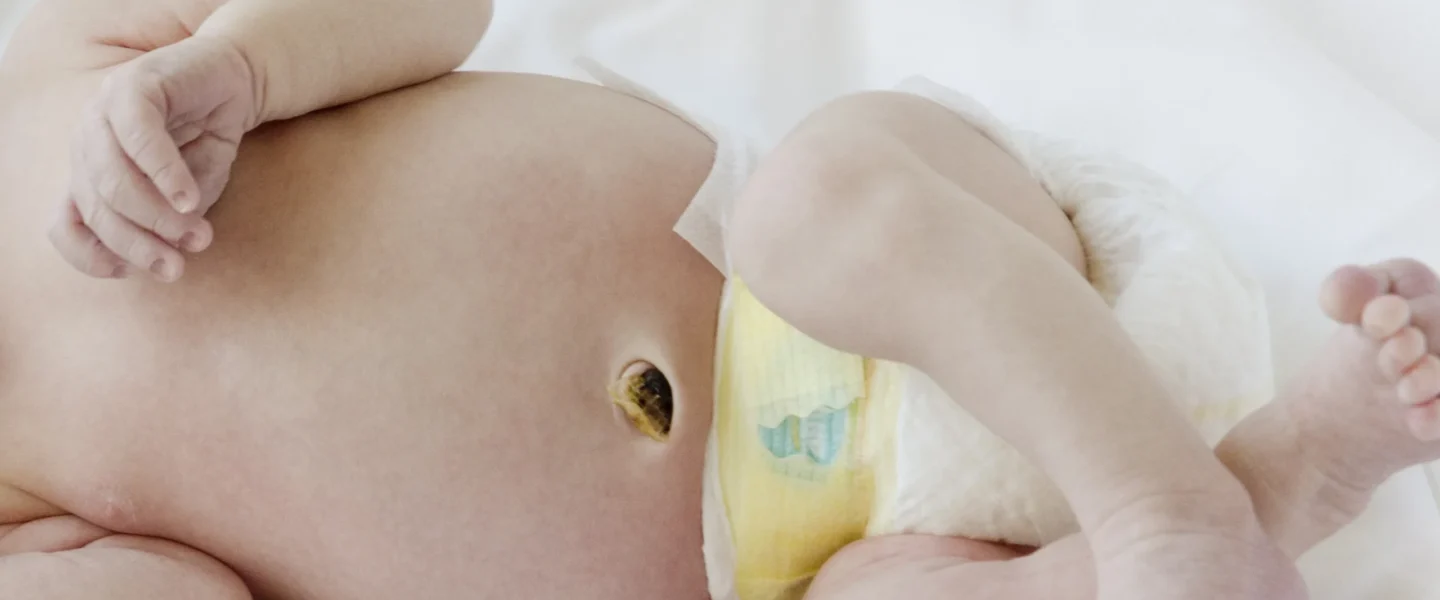
The cord stump gradually dries, shrinks and changes from pale to brown or black. Most separate within one to three weeks. A dark dry stump is usually normal; spreading redness in the surrounding skin is not. If the stump is still attached after three weeks, contact your pediatrician.
Five steps for daily care
Wash your hands
Clean hands before diaper changes or touching the stump. Routine care rarely needs special equipment.
Check the skin around the base
Look for spreading redness, swelling, tenderness or discharge. Observe whether your baby feeds and behaves normally.
Keep it clean and dry
Leave a clean stump alone. If stool or urine soils it, gently clean with water and mild soap if needed, then pat dry. Do not scrub or pick away crusts.
Fold the diaper down
Keep the waistband below the belly button to reduce rubbing and moisture. Newborn diapers with a cutout can help but are not essential.
Let it fall off
Never tug at the stump, even if it appears to hang by a thread. Pulling can injure the skin and cause bleeding.
Bathing while the stump is attached
Many maternity teams recommend sponge baths until the stump falls off and the navel heals. Keep the baby warm, wash one area at a time and gently dry the cord area. A brief accidental splash is not necessarily harmful. Follow your discharge instructions. Our newborn bathing guide explains how often baths are needed.
Should you use alcohol, antiseptic or oil?
For most newborns in clean healthcare settings, the American Academy of Pediatrics recommends dry cord care rather than routine alcohol application. Avoid oils, powders, herbal pastes and household antiseptics. In some higher-infection-risk birth settings, clinicians recommend chlorhexidine under local protocols. Follow your maternity team’s specific guidance rather than improvising a treatment.
What happens after the stump falls off?
The navel may briefly look pink or moist. A tiny blood spot around separation can occur, but ongoing or increasing bleeding needs medical assessment. Persistent moisture or a small pink bump may be an umbilical granuloma; ask a pediatrician rather than trying home remedies. Keep the area clean and dry while it heals.
Warning signs: when to seek help
Seek urgent medical evaluation for spreading redness around the navel, swollen or painful skin, pus or foul-smelling drainage, or a newborn who feeds poorly, is unusually sleepy or seems unwell. A fever of 100.4°F (38°C) or higher in a baby under three months requires immediate medical evaluation. Do not wait for a routine appointment when infection is suspected.
Questions parents often ask
What if the diaper rubs the stump?
Adjust the diaper below the stump. Check for irritation or bleeding. Seek advice if bleeding continues or is more than a few spots.
What if it smells?
A drying stump can have some odor, but a strong foul smell, especially with redness or drainage, needs prompt medical advice.
What if the belly button bulges?
A bulge when crying may be an umbilical hernia rather than a cord problem. Ask your pediatrician to assess it. Never tape a coin or another object over the navel.
What if it has not fallen off after three weeks?
Arrange a pediatric review. Do not pull the stump off. Your clinician can decide whether further evaluation is needed.
Make daily changes simpler
Set out a clean diaper, soft cloth, water and spare clothes before placing your baby on a changing surface. Never leave a baby unattended on an elevated surface. Our diaper bag checklist covers outings; the newborn clothing checklist helps with easy-change outfits. For soiled clothes, see washing baby clothes.
When to observe, call or seek urgent care
Observe: A drying dark stump, normal surrounding skin and a well baby. Call your pediatrician: Delayed separation, persistent wetness, a pink lump or uncertain bleeding. Seek urgent care: Spreading redness, pus, a fever or a baby who seems ill. The baby’s overall condition matters as much as the stump’s appearance.
Sources and editorial note
This educational guide is not a diagnosis. Sources: American Academy of Pediatrics: Umbilical Cord Care; HealthyChildren: Umbilical Cord Symptoms; NHS: Washing and bathing your baby. Individual discharge instructions take priority.