To wash baby clothes, start with the care label, use the right amount of a suitable laundry detergent, rinse thoroughly, and dry everything completely before storing it. You do not automatically need a separate washing machine cycle or an expensive detergent labeled “baby.” What matters most is clean clothing, a comfortable fabric, and a routine you can repeat when spit-up or a diaper leak happens at an inconvenient time.
This guide covers the first wash, everyday loads, milk and diaper stains, sensitive skin, and the laundry shortcuts worth keeping. It is based on guidance from the American Academy of Pediatrics (HealthyChildren), the American Academy of Dermatology, and Children’s Minnesota rather than product claims or personal product testing.
Should you wash new baby clothes before the first wear?
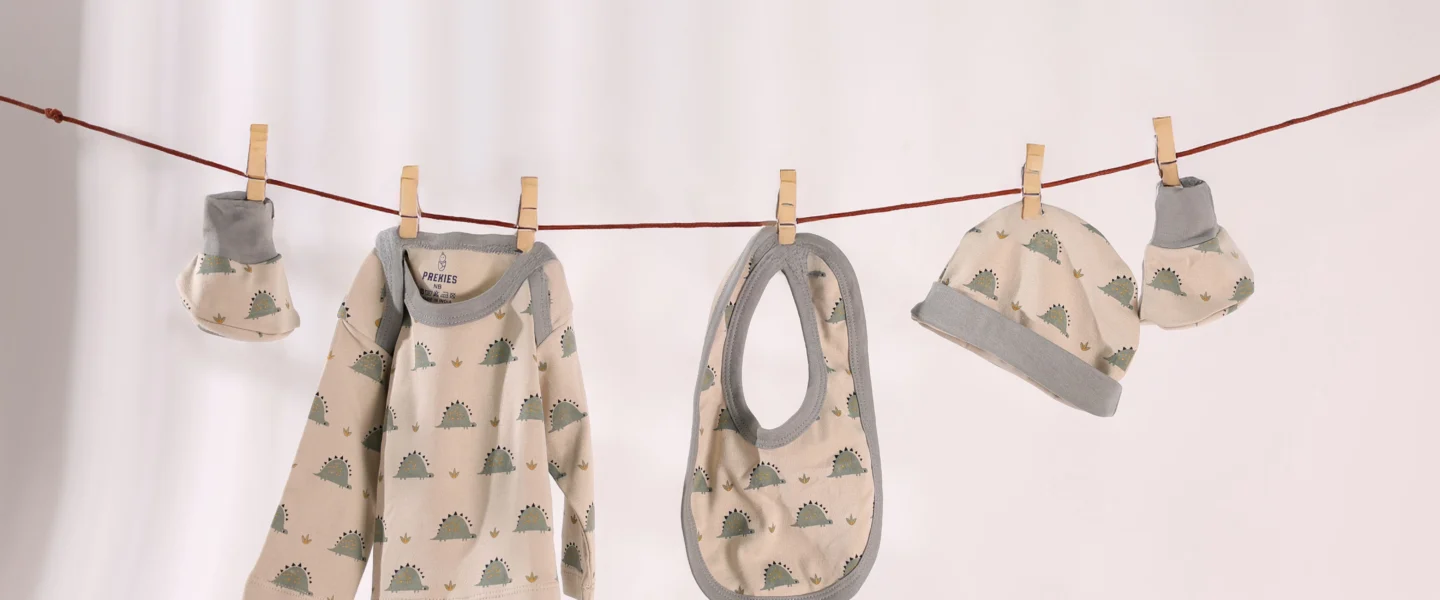
Yes, washing clothes that will touch a newborn’s skin before their first use is a sensible default. New garments may have been handled during manufacturing, shipping, or display, and washing also helps remove some finishing residues. The AAP recommends washing baby clothing before use, especially everyday items that sit against the skin. Outerwear that rarely touches the skin may be a practical exception if the care instructions make washing difficult.
Start with bodysuits, sleepers, pants, hats, socks, burp cloths, and washable crib sheets. Check each label first. Sort by fabric and color, close hook-and-loop fasteners, and put tiny socks or mittens in a mesh laundry bag so they do not disappear inside larger items.
If you are still building your baby’s wardrobe, our newborn clothing checklist explains how many everyday outfits are useful before buying more.
How to wash baby clothes in 7 practical steps
- Read the label. Check water temperature, drying instructions, and any special requirements for sleepwear or delicate fabrics.
- Separate what needs different care. Keep dark colors from new whites if bleeding is possible; set aside heavily soiled pieces and cloth diapers for their own handling.
- Deal with visible mess first. Remove excess spit-up or stool and rinse or soak a stained garment promptly when practical.
- Load the machine loosely. Leave enough room for clothes to move and rinse. A crowded drum can make cleaning less effective.
- Measure detergent. Follow the product’s dosage directions and adjust for load size and water conditions; more detergent does not automatically mean cleaner clothes.
- Choose the cycle the garment needs. An ordinary cycle is often enough for durable cotton basics. Use gentler settings for delicate items and follow the care label for water temperature.
- Dry completely, then put away. Check cuffs, seams, and thicker items for remaining dampness before folding into a clean drawer.
You do not need to run a hot-water wash for every baby garment. The right temperature depends on the item, soil level, laundry product, and manufacturer instructions. If someone in the household is ill or laundry is contaminated, follow appropriate hygiene guidance rather than treating all loads as identical.
Do baby clothes need special baby detergent?
Not necessarily. The AAP notes that many families wash baby clothes alongside the family’s laundry without problems. Children’s Minnesota similarly explains that separate baby detergent is not routinely required when a baby does not have a skin condition or sensitivity. “Baby” on a label is not a guarantee that a detergent is more suitable for your particular child.
For a baby with eczema, sensitive skin, or a suspected reaction, a fragrance-free, dye-free detergent is a sensible choice. The American Academy of Dermatology specifically recommends those features for children with eczema. “Unscented” is not always the same as fragrance-free, because a product may use masking fragrance.
If your baby develops a rash after a detergent change, consider the timing, the location of the rash, and other possible causes. Stop using a suspected irritant and discuss persistent, widespread, or worsening symptoms with your pediatrician. Laundry changes can help with irritation, but they are not a substitute for eczema treatment or a medical assessment.
Can you wash baby clothes with adult clothes?
Usually, yes. If the garments have compatible care instructions and your baby has no known sensitivity, a shared load can be practical. A separate baby-only load may still be useful for very small garments, items needing a gentler cycle, or clothing with significant stool contamination.
A good compromise is to keep one mesh bag for tiny baby pieces, sort by washing needs instead of family member, and reserve a separate wash for items that are heavily soiled or require special treatment. If an adult’s work clothes carry chemicals, oils, or other hazardous contaminants, do not mix those items with baby laundry; follow the workplace or product-specific cleaning instructions.
How to remove milk, spit-up, and diaper stains
Fresh stains are generally easier to address than dried ones. The AAP advises removing as much of the spill as practical and rinsing or soaking the garment rather than waiting for the next full laundry day.
Breast milk, formula, or spit-up
Blot or rinse away excess milk. Use a small amount of laundry detergent or a stain remover appropriate for the fabric, following the label. Allow the recommended contact time, then wash normally. Check whether the mark remains before using a hot dryer, because heat can make some stains harder to remove.
Diaper leaks and stool
Remove solids carefully, keep the soiled item away from clean clothes, and rinse as directed by the garment’s care instructions. Wash thoroughly with an appropriate detergent. Clean any sink or surface that came into contact with the mess and wash your hands afterward. Avoid vigorous scrubbing that damages soft knit fabrics.
Older yellow marks
Try a fabric-compatible pretreatment and another wash before assuming a garment is ruined. Results vary with fabric, age of the stain, and previous drying. Never mix cleaning chemicals, and never combine bleach with ammonia or acidic cleaners. Keep all laundry chemicals secured away from children.
What about fabric softener, dryer sheets, and scent boosters?
These products are optional, not requirements for clean baby clothes. For eczema-prone skin, fragrance from softeners and dryer sheets can be an irritant; the AAD recommends fragrance-free products if softener is used. Children’s Minnesota advises avoiding anti-static products and fabric softeners when sensitive skin is a concern.
There is also a practical reason to check labels before adding anything: some baby sleepwear has specific fabric or flame-resistance care instructions. The AAP cautions that soap flakes can affect flame-retardant properties of certain sleepwear. Follow the garment’s label rather than assuming all laundry additives are interchangeable.
How should you dry baby clothes?
Machine drying is convenient when the label allows it. Select a suitable heat setting and avoid overdrying delicate or stretchy pieces. Air drying is also fine when the environment allows items to dry completely and stay clean; damp laundry should not sit in a pile for hours. If your child has eczema and outdoor allergens appear to trigger flares, the AAD recommends machine drying rather than hanging clothing outside.
Before putting clothes away, feel inside thick waistbands and folded seams for trapped moisture. A small clean drawer or basket for ready-to-wear outfits makes early-morning changes faster.
Do cloth diapers follow the same laundry routine?
Not always. Reusable diapers may have their own washing and drying requirements, and they handle heavier contamination than ordinary clothing. Follow the diaper manufacturer’s instructions, including any rules for detergent, wash cycles, rinsing, and waterproof covers. Keep used diapers contained safely until washing and wash your hands after handling them.
For disposable-diaper households, the laundry issue is mainly leak cleanup and spare outfits. Our guide to saving on diapers discusses fit and buying decisions that can help make everyday changes more manageable.
A low-stress baby laundry routine for busy parents
Rather than waiting for an enormous pile, choose a rhythm based on how many outfits you actually own. A small wardrobe may mean washing every couple of days; a larger rotation gives you more flexibility. The right schedule is the one that leaves a few clean essentials available without creating a second full-time job.
- Keep one accessible basket for ordinary baby clothes and a separate place for heavily soiled items.
- Rinse or pretreat major stains when you notice them; do not spend time spot-cleaning every tiny mark.
- Use a mesh bag for socks and other small pieces.
- Keep two or three clean outfits easy to grab, with the rest stored by size.
- Fold by type rather than creating complicated matching sets that slow down changes.
- Keep detergent pods and all cleaning products locked away and out of children’s reach.
When packing for a day out, a spare outfit and a small bag for soiled clothes are often more useful than extra accessories. See our diaper bag checklist for a practical packing approach.
Common baby laundry mistakes to avoid
- Overusing detergent: follow the dosing instructions instead of pouring in extra for a stronger smell.
- Ignoring care labels: especially on sleepwear, waterproof layers, and delicate knits.
- Mixing heavily contaminated items with everything: handle stool or hazardous residues separately and clean surfaces afterward.
- Using fragrance as a cleanliness test: clean laundry does not need to smell strongly perfumed.
- Putting damp clothes into storage: dry items fully first.
- Assuming a rash is always from detergent: persistent skin symptoms may need professional evaluation.
Baby clothes washing: quick answers
Do I need to wash every new outfit before birth?
Wash the basics you expect to use soon. Keep labels on extras until you know your baby’s size, especially if you might return or exchange them.
Can I use regular detergent for a newborn?
Often yes, if the baby tolerates it and the detergent suits the garments. If there is eczema or irritation, choose a fragrance-free, dye-free option and seek individual guidance as needed.
Should I wash baby clothes separately?
Not routinely. Separate by fabric care, color, contamination, and skin sensitivity rather than assuming all baby clothes require their own load.
Is hot water always better for baby laundry?
No. Use the garment label and the level of soiling to guide your choice. Very hot water can damage some fabrics and is not a universal requirement for everyday baby clothing.
How often should I wash a baby’s clothes?
Wash garments when dirty, wet, or uncomfortable to reuse. There is no single required schedule; outfit supply, spills, and your family’s routine determine how frequently you need a load.
Bottom line
Good baby laundry care is simple, consistent, and label-led. Wash new skin-contact clothes before first use, pretreat obvious stains, measure detergent, and dry items completely. Most families do not need a separate baby-only detergent or laundry cycle. If sensitive skin or eczema is involved, fragrance-free and dye-free products are a better starting point than strong scents or elaborate additives.
Editorial sources: AAP / HealthyChildren: Cleaning Baby Clothes; AAD: Identifying Eczema Triggers; AAD: Eczema Laundry Tips; Children’s Minnesota: Laundering Your Baby’s Clothes. General educational guidance only; consult your child’s clinician about individual skin conditions or unusual symptoms.
Featured image: Photo by ALOK DAS, Pexels, used under the Pexels License.