
Saving money on diapers is less about finding the cheapest box and more about lowering the cost of a routine that still keeps your baby clean, dry, and comfortable.
The best savings usually come from comparing unit prices, avoiding oversized stockpiles, using the right fit, and buying in bulk only after you know a diaper works for your baby.
Compare price per diaper, not price per box
Box sizes make shelf prices hard to compare. Divide the price by the number of diapers in the package. Do the calculation again when your baby moves up a size because the count per box often changes.
If you want a personal monthly estimate, track how many diapers you use over three typical days, calculate a daily average, and multiply by roughly 30. That will usually be more useful than a generic internet estimate.
Do not stockpile too far ahead
Babies do not move through diaper sizes on a schedule. A large stockpile can become wasted money if your baby outgrows a size or a particular fit does not work well.
Keep enough backup stock for your normal shopping routine, but test a size and brand before committing to multiple large boxes.
Use fit problems as information
Frequent leaks or blowouts can be a sign that the size, shape, absorbency, or fastening is not working for your baby. Before assuming the whole brand is bad, recheck the manufacturer’s sizing guidance and make sure the leg cuffs and fasteners are positioned correctly.
A diaper that costs slightly more per change can still be better value if it reliably prevents leaks and extra laundry.
Do not save money by stretching dirty diapers
The CDC recommends good hygiene during diaper changes, including cleaning the child, keeping a hand on a child who is on a changing surface, cleaning the surface after contamination, and washing hands afterward. See the CDC’s diaper-changing guidance for home.
A soiled diaper should be changed promptly. Saving a diaper is not worth prolonged skin contact with stool or avoidable hygiene problems.
Keep diaper-rash prevention simple
The AAP’s HealthyChildren guidance recommends frequent diaper changes, gentle cleaning, time for skin to dry, and a barrier paste such as zinc oxide or petrolatum when needed. See HealthyChildren’s diaper-rash guidance.
If your baby has sensitive skin, fragrance-free wipes or plain water may be useful. If a rash is blistering, bleeding, spreading outside the diaper area, very painful, or not improving, contact your child’s healthcare provider rather than continuing to switch products at random.
Test a small pack before buying a large box
Use a normal week to evaluate a new diaper: daytime movement, naps, car rides, and overnight use if appropriate. If a diaper works, then bulk pricing or a subscription may make sense.
If it does not work, a small pack is much cheaper to abandon than a multi-month stockpile.
Daytime and overnight needs can be different
Some families use one diaper for daytime and a more absorbent option overnight. There is no reason to pay for an overnight feature on every change if your baby only needs it for one part of the day.
Follow the product’s sizing and use instructions, and change the plan if your baby develops persistent leaks or skin irritation.
Watch subscriptions as closely as prices
A subscription only saves money when the size, quantity, and delivery frequency still match what you use. Check the next shipment before it processes. Pause or change it as soon as your baby is nearing another size.
Track wipes as part of the diaper budget
Wipes are another repeated cost. Use what you need for hygiene without turning every change into a handful of wasted wipes. Families with sensitive skin may find that fragrance-free wipes or soft cloths with water work better.
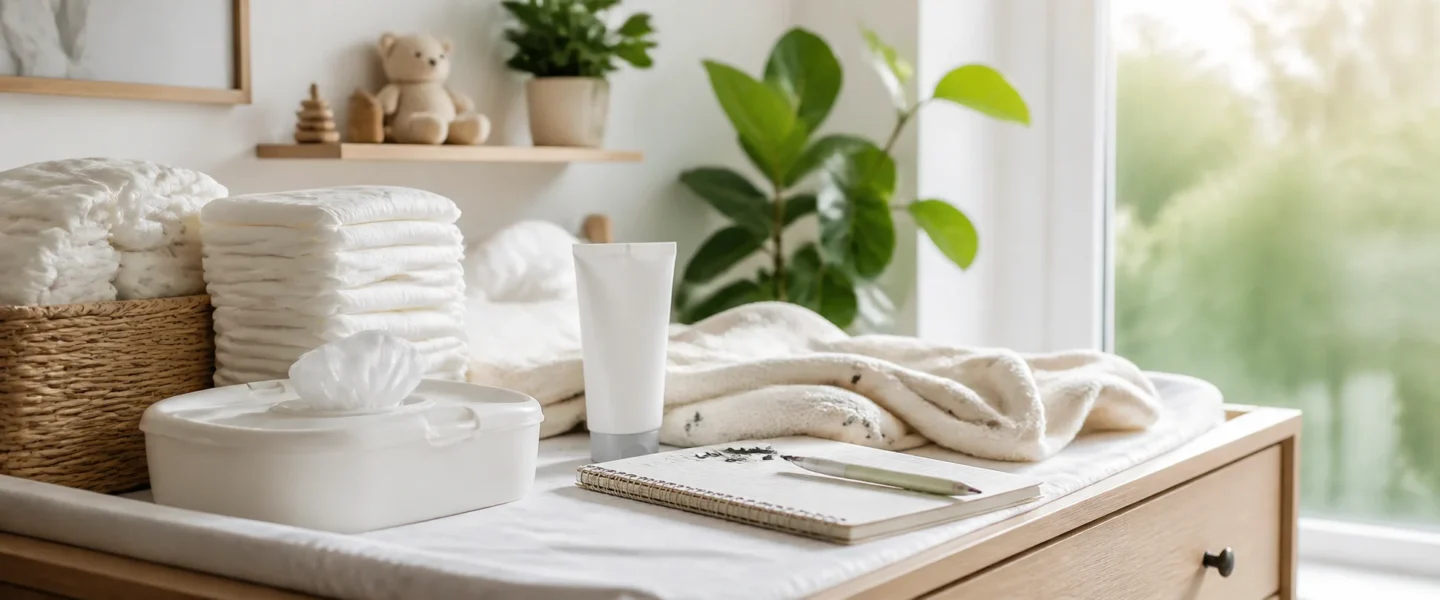
A simple diaper station
- Current-size diapers.
- Wipes or clean soft cloths.
- Barrier cream if needed.
- A waterproof or washable changing surface.
- A secure, lined trash container.
- Clean spare clothes nearby.
- Handwashing access.
If your changing setup is in the nursery, pair it with our nursery babyproofing checklist.
Are store-brand diapers safe?
A lower price by itself does not make a diaper unsafe. Look at fit, skin response, absorbency, and whether the product is being used according to its instructions. If a particular diaper repeatedly causes problems for your baby, stop using it and choose another option.
Are cloth diapers cheaper?
They can be for some households, but the answer depends on purchase cost, washing, drying, supplies, time, water and electricity prices, and whether the diapers are reused for more than one child. Compare the whole routine rather than the unit price alone.
Bottom line
The most affordable diaper is the one that works reliably for your baby at a sustainable cost. Compare unit prices, buy ahead cautiously, protect hygiene and skin care, and use bulk deals only after the fit is proven.
