Quick answer: Most babies do not need shoes while learning to stand, cruise or take their first steps indoors. Bare feet on a clean, safe floor allow a baby to feel the ground and move their toes freely. Once your child is walking outdoors, shoes become useful for protecting feet from rough ground, sharp objects and temperature extremes. The best first shoes fit well, bend easily at the front, stay securely on and have a grippy sole. They do not need to be expensive or advertised as “developmental.”
The question is not “What age should I buy baby shoes?” but “What is my child doing, and where are they doing it?” A baby who is crawling on the living-room floor has different needs from a toddler walking across a hot pavement. This guide helps you decide when shoes are useful, how to check the fit and which marketing claims you can safely ignore.
When Does a Baby Actually Need Their First Shoes?
The American Academy of Pediatrics (AAP) says babies’ feet develop best without being confined by shoes during the early months, and that shoes become useful when children start walking outdoors. The NHS likewise advises that proper shoes are not needed until a child is walking independently; even then, they can initially be reserved for outdoor use.
Development is individual. Some babies pull to stand for weeks or months before walking. Buying structured shoes just because a baby has reached a certain birthday can mean purchasing something they do not yet need. Soft socks or loose booties may keep feet warm in cool weather, but check that they do not squeeze the toes. For a baby who is not walking, think comfort and warmth rather than “support.”
Before standing: prioritize free movement
Babies learn by moving their legs, feet and toes. During awake play on a safe surface, leaving feet uncovered is usually fine if the room is comfortable. Footed pajamas are convenient, but check that there is enough room for toes as your baby grows. Clothing that is too small can become restrictive before the rest of the outfit looks obviously tight.
Pulling up and cruising: barefoot is usually enough indoors
When a baby starts standing while holding furniture or moving sideways along the sofa, barefoot practice on a clean, non-slippery floor helps them sense the surface. A children’s NHS therapy resource notes that barefoot walking allows babies to feel different textures and can support balance while learning. If floors are cold, use well-fitting socks with non-slip grips rather than loose slippery socks.
Independent outdoor walking: choose protection
Once your child regularly walks outside, shoes protect against grit, rough surfaces and other hazards. The goal is protection without unnecessarily restricting foot movement. A shoe should not force a particular gait, compensate for a normal toddler wobble or promise to make walking happen faster.
Barefoot Versus Shoes: Which Is Better for Learning to Walk?
Barefoot and shoes serve different purposes, so they are not competing parenting philosophies. Barefoot practice is useful on safe indoor surfaces because the foot can move naturally and the child can feel the ground. Shoes are useful when the environment itself poses a risk. The sensible choice depends on surface safety, cleanliness, temperature and your child’s comfort.
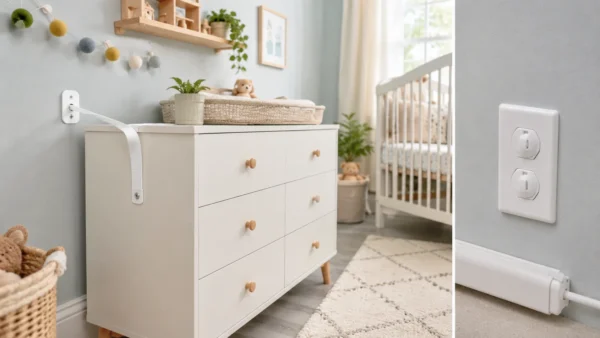
A smooth indoor floor is not automatically safe if it is wet, littered with small objects or surrounded by unstable furniture. Clear the walking area and secure heavy furniture first. Our babyproofing checklist covers hazards that matter when babies start pulling up and moving around.
For outdoors, do not assume a barefoot child will avoid hazards. Pavements may be hot even when the air feels pleasant, and parks can contain glass, thorns or animal waste. Shoes help reduce contact with those hazards, but parents still need to inspect the walking area.
What to Look for in First Walking Shoes
1. A flexible front sole
Hold the shoe in your hands and bend the front where the toes would naturally flex. It should move without requiring a great deal of force. A rigid, thick fashion sole may look sturdy but can make it harder for a new walker to move naturally. Flexible does not mean flimsy: outdoor shoes still need a protective bottom.
2. A roomy, rounded toe area
Toddlers’ toes need space to spread and move. Choose a shape that follows the foot rather than tapering sharply to a point. Do not buy shoes that visibly pinch the toes, leave deep pressure marks or make your child curl their toes to keep them on. The NHS warns that tight shoes and socks can interfere with normal foot development.
3. A secure fastening
Hook-and-loop straps, laces or a suitable buckle can hold the heel in place. Slip-on shoes are convenient, but if the heel repeatedly slides out, the shoe may be too loose or the shape may not suit the foot. A child should not have to grip with their toes just to keep a shoe attached.
4. A grippy sole for the intended surface
A non-slip outsole helps on ordinary outdoor surfaces. A sole that feels very smooth may be unsuitable for damp tiles or polished floors. Test how the shoes behave during supervised walking, remembering that no shoe makes a slippery surface risk-free.
5. Lightweight, breathable materials
Look for a shoe that does not feel bulky relative to the child’s foot. Breathable fabrics and comfortable linings can reduce sweat buildup and rubbing, especially in warm climates. Avoid shoes with rough internal seams, stiff decorative pieces or detachable ornaments that could come loose.
6. No unnecessary heel or special insert
For a typically developing new walker, ordinary comfortable shoes are generally sufficient. Claims that every toddler needs rigid ankle support, built-in arch correction or an expensive orthopedic design should be treated skeptically. If a clinician has diagnosed a specific foot or walking condition, follow their individualized footwear advice instead.
How to Measure Baby’s Feet and Check the Fit
Foot size changes quickly, and brand sizes are not interchangeable. Whenever possible, have both feet measured by someone trained in children’s footwear fitting. One foot can be slightly larger than the other; fit to the larger foot. If buying online, use the brand’s current size chart and the child’s actual foot measurements rather than relying on age labels.
A practical at-home measuring method
- Measure near the time you plan to buy, ideally while your child is standing with support if they can do so comfortably.
- Place paper on a firm floor against a wall, with the heel gently against the wall. Keep the foot flat without forcing it.
- Mark the longest toe, measure heel to mark and repeat for the other foot. Some children have a second toe longer than the big toe.
- Use the larger measurement and follow the manufacturer’s allowance and sizing guidance; do not guess a universal “extra centimetre” for every shoe shape.
- Try the shoes with the socks your child will normally wear and check the fit while standing and taking a few supervised steps.
A paper measurement is a starting point, not a substitute for trying shoes on. Shoe shape, width, internal stitching and heel construction all affect comfort. If the child cannot yet stand, a parent can gently measure the foot while relaxed, but there is rarely a reason to rush into buying structured walking shoes.
The toe-room check
The AAP suggests roughly a finger-width of space between the longest toe and the inside front of the shoe. Because you cannot see toes through a closed shoe, gently feel for their position while the child is standing. Some shoes have removable insoles that make it easier to inspect toe room, but only use that check if the insole represents the shoe’s actual usable interior.
The heel and width check
The heel should stay in place as your toddler walks; repeated slipping can mean the shoe is too large or the heel shape is wrong. Check both sides of the foot for pressure, and look for persistent red marks after removing the shoe. A shoe that is long enough can still be too narrow.
The walking test
Let your child walk naturally for a few minutes under supervision. Watch for repeated tripping, obvious discomfort, refusal to put weight on a foot, or a change from their usual movement. New shoes may feel unfamiliar, but persistent distress or rubbing is not something to “break in” on a baby’s feet.
How Often Should You Recheck the Size?
Check the fit frequently rather than waiting for shoes to look worn. The AAP recommends checking about once a month, noting that the first pair may last only two or three months. Growth varies, so a monthly fit check is more useful than buying the next size on a fixed calendar.
Signs that shoes may be getting small include toes reaching the front, tight straps, difficulty putting the shoes on, new rubbing, or a child who suddenly resists wearing them. Do not automatically size up by several sizes “to make them last”: shoes that are too large can slip and make walking awkward.
What About Socks, Booties and Soft-Soled Shoes?
For non-walkers, socks and soft booties are mainly for warmth and comfort. They should be easy to remove, not constrict the ankle and not have loose decorations. On smooth indoor floors, ordinary socks can be slippery; barefoot feet or properly fitted grippy socks may work better for a child practicing standing.
Soft-soled shoes can offer light protection outdoors or on cooler surfaces when a child is just beginning to walk. Once a child walks regularly over rough outdoor ground, choose an appropriate protective sole. Do not assume “barefoot-style” marketing automatically guarantees good fit or safety; examine the actual construction and your child’s needs.
First Shoes in Warm Weather and Different Home Environments
In hot weather, choose breathable shoes and avoid leaving them on unnecessarily indoors. Check pavement temperature before allowing a child to walk outside, and do not let a toddler walk barefoot on surfaces that may burn or cut the skin. In cooler weather, socks can add warmth, but thicker socks also change shoe fit; recheck toe room when you change sock thickness.
For families with tiled floors, slippery indoor socks may be a bigger issue than lack of shoes. For homes with rugs, watch for curled edges and loose mats. For outings, pack shoes in a clean bag and let damp pairs dry fully before the next use. A practical diaper bag checklist can help you decide what actually needs to come along.
Should You Buy Expensive or Secondhand Baby Shoes?
Price is not a reliable measure of developmental benefit. A reasonably priced pair that fits and protects the foot is usually more useful than a premium pair bought for a brand name. New walkers often outgrow shoes before the uppers wear out, so avoid stockpiling several sizes in advance.
If considering secondhand shoes, inspect the sole for uneven wear, the inside for compressed or misshapen areas, and the upper for damage. A previously worn shoe may have molded to another child’s foot. If you cannot confirm good condition and a comfortable fit, pass on it. Socks and loose non-walking booties are less of a fit investment than shoes used for daily walking.
When Footwear Is Not the Real Issue
Early walking can look uneven or wide-based while children learn balance. Shoes should not be used to diagnose or correct an unusual gait. Contact your child’s pediatrician if you notice pain, persistent limping, one-sided weakness, refusal to bear weight, a sudden loss of a skill, or a foot that looks swollen or injured. A clinician can decide whether an assessment is needed.
If your child is not yet walking, avoid comparing them with another child at the same age. Developmental timelines vary. Raise concerns about motor milestones with your pediatrician, especially if your child is not meeting expected milestones or has lost skills. For earlier movement practice, see our tummy-time guide; tummy time is for awake, supervised babies, not for sleep.
First Baby Shoes: Common Questions
Do shoes help babies learn to walk faster?
No reliable pediatric guidance supports buying shoes to make a baby walk sooner. Shoes are mainly for protection once walking outdoors. Letting babies practice safely barefoot indoors is generally appropriate.
Can my baby wear cute shoes for photographs?
A brief, comfortable photo outfit is different from wearing structured shoes all day. Avoid tight footwear, loose decorative pieces and anything that causes discomfort. Remove shoes after the photo if they are not needed.
Are high-top shoes better for ankle support?
High tops are not routinely necessary for healthy toddlers. Prioritize fit, flexibility and a secure heel. Seek individualized advice if your child has a diagnosed medical or mobility issue.
What if my child refuses to wear shoes?
Try a different fit or softer, lighter design, and introduce shoes briefly in a safe setting before a longer outing. Do not force a painful pair. Check for rubbing, pinched toes or an unfamiliar stiff sole.
Should I buy one size larger?
Shoes need growing room but not so much that the heel slips or the child trips. Use measurements and an actual fit check instead of automatically sizing up.
Can toddlers go barefoot outside?
It depends on the surface. A clean, supervised lawn may present different risks from a hot pavement, rocky path or shared public area. Inspect for sharp objects and temperature hazards. Foot protection is sensible when the surface is uncertain.
A Simple Shopping Checklist
- Your child is actually walking outdoors, rather than simply reaching a birthday.
- Both feet have been measured recently and the larger foot guides the fit.
- The toe area is rounded and roomy; the heel stays in place.
- The front of the sole bends comfortably and the outsole grips.
- Fastenings are secure, materials are comfortable, and no small parts are loose.
- Your child can take several natural steps without rubbing or repeated slipping.
- You will recheck the fit monthly instead of assuming the pair will last a season.
Bottom line: Let babies learn to move on safe surfaces without restrictive shoes. Buy the first practical walking pair when outdoor protection is needed, and judge it by fit and comfort—not age labels, elaborate features or price.
Sources and Image Credit
Medical and developmental guidance: American Academy of Pediatrics, “Shoes for Active Toddlers”; NHS, “Leg and foot problems in children”; NHS children’s health service, “Learning to walk”; Oxford Health NHS, “Children’s foot care”. This article is general parenting information and does not replace a pediatric examination.
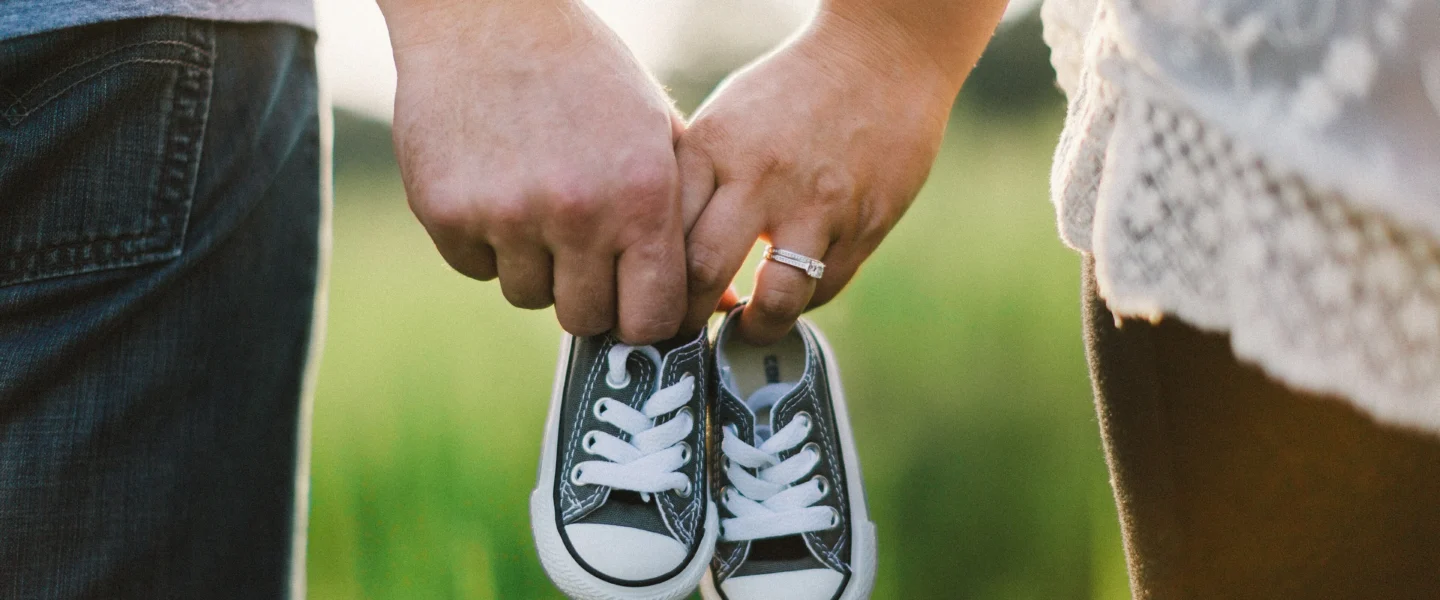
Featured photograph: “Baby shoes,” by Drew Hays, showing two adults holding small canvas baby shoes. Wikimedia Commons source; published under the CC0 1.0 public-domain dedication. The image has been resized for this article; it does not depict a product reviewed or endorsed by CooCoo Babys.