Baby sun protection starts with shade and clothing, especially during the first six months. Babies have delicate skin and can overheat quickly, so the goal is not simply to apply sunscreen and stay outside longer. A safer plan combines shade, lightweight covering clothing, a brimmed hat, sensible timing, and age-appropriate sunscreen.
For babies younger than 6 months, the U.S. Food and Drug Administration (FDA) recommends keeping them out of direct sun as much as possible and asking a doctor before using sunscreen. The American Academy of Pediatrics (AAP) similarly emphasizes shade and protective clothing for young infants. For babies 6 months and older, sunscreen becomes one part of a broader sun-safety routine.
What is the safest sun protection for a baby?
The most reliable approach is layered protection: shade first, then clothing and a wide-brimmed hat, with sunscreen on exposed skin when age-appropriate. No single product should do all the work.
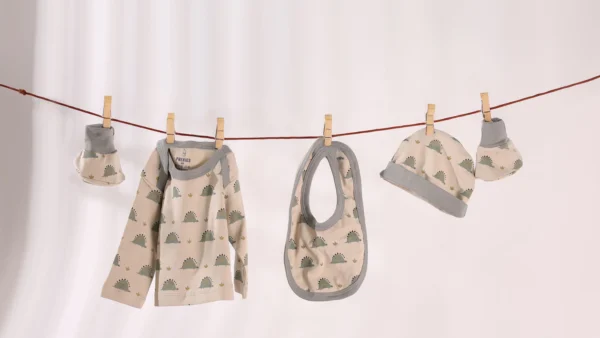
Shade can come from a tree, umbrella, stroller canopy, or another well-ventilated shelter. Clothing should be lightweight but provide meaningful coverage. Tightly woven fabrics generally block more ultraviolet (UV) radiation than loose, sheer fabrics. A brimmed hat protects more of the face, ears, and neck than a baseball cap.
If you are planning a walk, our stroller safety and fit guide can help you choose a stroller that works for everyday outings. A canopy is useful for shade, but it should not turn the stroller into a hot, poorly ventilated enclosure.
Can babies under 6 months wear sunscreen?
Routine sunscreen use is not the first choice for babies under 6 months. The FDA advises keeping infants under 6 months out of the sun, using protective clothing when sun exposure cannot be avoided, and asking a doctor before applying sunscreen at this age.
This does not mean a young baby should be left unprotected if shade is imperfect. It means parents should plan the outing around physical protection rather than treating sunscreen as permission for prolonged direct sun. Seek shade, cover exposed skin with breathable clothing, use a brimmed hat, and minimize time in strong sunlight.
When can a baby start using sunscreen?
For babies 6 months and older, sunscreen can be used according to the product label. The AAP’s HealthyChildren guidance recommends broad-spectrum sunscreen and notes that mineral-based products can be a good choice for babies.
Look for “broad spectrum” on the label, which means protection against both UVA and UVB radiation. The FDA recommends broad-spectrum sunscreen with SPF 15 or higher; many pediatric sun-safety resources recommend SPF 30 or higher for practical family use. More important than chasing the highest number is applying enough product, covering missed areas, and reapplying as directed.
Is mineral sunscreen better for babies?
Mineral sunscreen is a reasonable option for babies over 6 months, particularly when sensitive skin is a concern. Mineral sunscreens use ingredients such as zinc oxide or titanium dioxide. The CDC Yellow Book notes that physical or mineral UV filters are less likely to irritate young children’s sensitive skin.
“Mineral” does not automatically mean a product is perfect for every child. Read the Drug Facts label, avoid products that have previously irritated your baby’s skin, and stop using a product if a significant rash develops. If your baby has eczema, allergies, or another skin condition, ask your pediatrician or dermatologist for individualized advice.
How much SPF does a baby need?
Choose a broad-spectrum sunscreen with at least SPF 15 when sunscreen is appropriate. Many families choose SPF 30 or higher for children because it provides a practical margin when application is not perfectly even.
SPF is only part of the picture. Sunscreen can rub off, wash off, or be applied too thinly. The CDC recommends combining sunscreen with shade, protective clothing, and a wide-brimmed hat rather than relying on sunscreen alone.
How often should you reapply sunscreen on a baby?
For children old enough to use sunscreen, the FDA advises reapplying at least every two hours and more often after swimming or sweating. Follow the specific product’s water-resistance directions because labels may specify reapplication after a particular amount of time in water.
Do not forget small exposed areas such as ears, the back of the neck, hands, and tops of feet. Apply sunscreen before exposure according to the label; many products direct users to apply about 15 minutes before going outside.
What time of day is the sun strongest?
The FDA advises limiting sun exposure especially between 10 a.m. and 2 p.m., while AAP guidance often recommends extra caution across a broader late-morning-to-afternoon window. Local UV intensity varies by season, cloud cover, altitude, and location, so the clock is not the only signal.
The CDC recommends using sun protection when the UV Index is 3 or higher. For parents, that makes the UV Index a useful planning tool: move a walk earlier or later, choose a shaded route, or shorten outdoor time when UV levels are high.
Can a stroller canopy fully protect a baby from the sun?
No. A stroller canopy can provide useful shade, but it is not complete UV or heat protection. Sunlight can reach a baby from the side, and reflected UV can come from surfaces such as pavement, sand, or water.
Avoid draping a heavy blanket completely over the stroller to create shade. Restricting airflow can trap heat around the baby. Use the stroller’s designed canopy or another shade solution that preserves ventilation, check your baby frequently, and move to a cooler place if the environment becomes too hot.
For longer outings, our diaper bag checklist can help you pack without carrying unnecessary extras.
Does a baby need sun protection on cloudy days?
Yes, sun protection can still matter when it is cloudy or cool. UV radiation is not the same thing as visible sunshine or air temperature. The CDC notes that UV exposure can occur on cloudy and cool days, so parents should not use temperature alone to decide whether protection is needed.
Check the UV Index, consider how long you will be outside, and use shade and clothing when exposure is meaningful. This is particularly important around water, sand, snow, and other reflective surfaces.
Can babies with darker skin get sunburn?
Yes. More melanin can provide some natural protection, but babies and children of every skin tone can experience UV damage and sunburn. The CDC explicitly notes that anyone can get sunburn regardless of race, ethnicity, or skin tone.
Do not wait for visible redness before protecting a baby. Sunburn may also look different across skin tones, making prevention more reliable than judging exposure by appearance.
What should you do if a baby gets sunburned?
Move the baby out of the sun immediately and keep the affected skin cool. The FDA advises parents to watch young babies for signs such as redness, fussiness, and excessive crying and to contact the baby’s pediatrician if an infant becomes sunburned.
Seek medical advice promptly for a young infant, significant blistering, severe pain, fever, unusual sleepiness, poor feeding, dehydration concerns, or if your baby otherwise seems unwell. Do not apply unfamiliar medicated creams or home remedies to an infant’s burn without appropriate medical guidance.
How do you protect a baby from both sun and heat?
Sun safety and heat safety overlap, but they are not identical. Shade reduces direct radiation, yet a shaded stroller or parked area can still become dangerously hot. Dress your baby lightly, preserve airflow, take breaks indoors or in a cooler location, and monitor feeding and behavior.
Young babies are less effective at regulating body temperature than adults. Avoid scheduling long outings during the hottest part of the day simply because you have a canopy or sunscreen available.
If you use a carrier outdoors, positioning and airflow matter too. Our baby carrier safety guide explains how to keep a newborn supported while maintaining a clear airway.
Baby sun protection checklist
- Keep babies under 6 months out of direct sunlight as much as possible.
- Use shade that still allows good airflow.
- Dress babies in lightweight, covering clothing.
- Choose a wide-brimmed hat that shades the face, ears, and neck.
- For babies 6 months and older, use broad-spectrum sunscreen as directed.
- Reapply sunscreen at least every two hours and after swimming or heavy sweating, following the label.
- Check the UV Index instead of judging risk only by temperature or clouds.
- Remember that water, sand, pavement, and other surfaces can reflect UV.
- Watch for overheating as well as sunburn.
Bottom line
Baby sun protection is strongest when sunscreen is only one layer of the plan. For infants under 6 months, prioritize shade, protective clothing, a brimmed hat, and avoiding direct sun; ask a doctor before using sunscreen. From 6 months onward, add broad-spectrum sunscreen to those same habits rather than replacing them.
A simple rule works well for everyday outings: check the UV conditions, choose shade whenever possible, cover what you can comfortably cover, protect exposed skin appropriately, and shorten the outing if your baby becomes hot or uncomfortable.
Sources: U.S. FDA — Sunscreen: How to Help Protect Your Skin from the Sun; American Academy of Pediatrics / HealthyChildren — Baby Sunburn Prevention; CDC — Sun Safety Facts; CDC Yellow Book — Sun Exposure.
This article provides general educational information and is not a substitute for advice from your child’s healthcare professional.