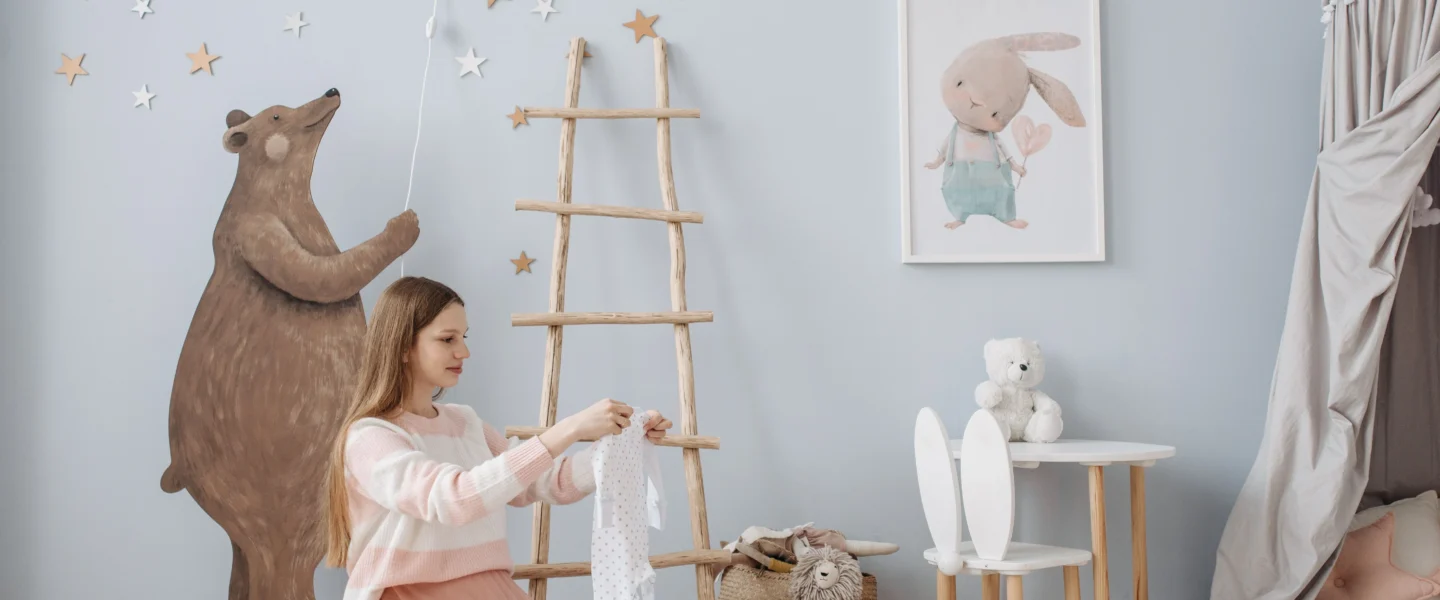
A practical newborn clothing checklist does not need dozens of outfits. For most families, a small rotation of easy-to-wash basics is enough: about 6–8 bodysuits, 6–8 sleepers, a few pants or leggings, socks if needed, and weather-appropriate outer layers. The exact number depends more on how often you do laundry, your climate, and how often your baby spits up or has diaper leaks than on any universal shopping rule.
The biggest mistake is buying too much in one size before you know your baby’s birth size and how a particular brand fits. Newborn clothing labels are only a starting point; babies grow at different rates and sizing varies between manufacturers. A smaller, flexible wardrobe usually wastes less money and drawer space.
Newborn clothing checklist: a sensible starting wardrobe
If you can wash clothes every two or three days, this is a useful starting point rather than a rigid requirement:
- 6–8 bodysuits: a mix of short- and long-sleeve styles based on the season.
- 6–8 zip or snap sleepers: useful for both daytime and nighttime changes.
- 3–4 pairs of soft pants or leggings: optional if you mostly use one-piece outfits.
- 2–3 simple daytime outfits: enough for visits or going out without filling the closet.
- 2–4 pairs of socks: useful when feet are not already covered.
- 1–2 lightweight sweaters or cardigans: for layering in cooler conditions.
- 1–2 weather-specific outer layers: chosen for your actual climate rather than the baby-shower season.
- 1–2 wearable blankets or sleep sacks: if you plan to use them and they fit your baby’s current size correctly.
Families who do laundry less often may want a few more basics. Families with easy laundry access can own fewer. If you are building a registry rather than shopping after birth, our practical baby registry guide can help separate everyday essentials from nice-to-have gear.
How many newborn-size clothes should you buy?
Buy fewer newborn-size pieces than you think you need, then add more after birth if necessary. Some babies wear newborn sizing for weeks, some move into 0–3 month clothing quickly, and some start in a larger size. Brand charts also use different height and weight ranges.
A balanced approach is to have enough newborn clothing for several days while keeping some 0–3 month basics ready. Leave tags on surplus items until you know what fits, provided the retailer’s return policy allows it. That gives you room to exchange unused sizes instead of discovering a drawer of unworn clothing a month later.
Is newborn size the same as 0–3 months?
No. They are normally separate size ranges, although the exact measurements overlap differently by brand. Ignore the age label when it conflicts with the manufacturer’s height and weight chart. Your baby’s actual fit matters more than the number printed on the hanger.
Clothing should allow comfortable movement without being so loose that it bunches around the face. Check fit again as your baby grows rather than assuming an outfit remains suitable because the label says “0–3 months.”
What clothes are easiest for a newborn?
In the first weeks, convenience matters. Babies may need frequent diaper and clothing changes, and complicated outfits quickly become less charming at 3 a.m. Look for soft fabrics, simple openings, and fast access to the diaper area.
Two-way zip sleepers can make nighttime changes easier because you may not need to fully undress the baby. Envelope-neck bodysuits can be pulled down over the shoulders after a messy diaper instead of over the baby’s head. Snaps are perfectly usable too; the best closure is the one you can operate easily while supporting your baby.
Do newborns need separate daytime and nighttime clothes?
Not necessarily. A clean, well-fitting sleeper can work perfectly well for much of a newborn’s day. You do not need a miniature adult wardrobe with separate outfits for every occasion.
For sleep, safety matters more than style. The American Academy of Pediatrics’ HealthyChildren guidance recommends avoiding overheating and says babies generally need no more than one extra clothing layer compared with what an adult would wear in the same environment. It also advises using properly sized wearable blankets or sleep clothing rather than loose blankets.
The CDC’s infant safe-sleep guidance likewise says to keep soft bedding out of the sleep area, avoid covering the baby’s head, and avoid overheating. Our baby sleep guide explains the broader safe-sleep setup.
How should you dress a newborn for warm weather?
Choose light, breathable clothing and adjust layers to the actual temperature rather than the calendar. The American Academy of Pediatrics notes that in hot conditions babies may need fewer layers, while the CDC recommends loose, lightweight clothing for infants and children during heat.
Watch your baby rather than relying only on your own hands and feet as a temperature gauge. Sweating or a hot chest can be signs that a baby is too warm. For outdoor time, clothing is only one part of the plan; see our baby sun-protection guide for shade, clothing, sunscreen, and heat considerations.
How should you dress a newborn in cooler weather?
Use light layers that can be added or removed as conditions change. Indoors, avoid piling on clothing simply because the baby’s hands feel cool. When you move between a cold outdoor environment, a warm car, and a heated room, reassess the layers instead of leaving the same bundle on all day.
For sleep, do not solve a cool room by adding loose blankets to the crib. Appropriate infant sleep clothing or a correctly sized wearable blanket is the safer approach described by AAP and CDC safe-sleep guidance.
What should a newborn wear in a car seat?
Clothing should not interfere with the harness. Bulky coats or thick padded layers can prevent a car-seat harness from fitting as intended. Use normal close-fitting clothing under the harness and follow the car-seat manufacturer’s instructions for cold-weather use. A blanket can be placed over the secured harness after buckling if conditions require it, while keeping the baby’s face uncovered.
If you are still choosing a seat, our infant car-seat fit guide explains why vehicle fit and correct installation matter more than simply choosing the smallest-looking model.
What baby clothes are easy to overbuy?
Newborn-size special-occasion outfits are the easiest category to overbuy. Babies may outgrow them before there is a chance to use them. Shoes are also usually unnecessary for a newborn who is not walking. Large collections of matching hats, jackets, and coordinated sets often look useful in a registry but see much less wear than bodysuits and sleepers.
Another common trap is buying a future season too precisely. A six-month winter outfit bought before birth may fit in autumn—or not at all—depending on your baby’s growth and the brand. Buy the core wardrobe first and fill seasonal gaps closer to when you need them.
Should you wash baby clothes before the first wear?
Washing new clothes before first use is a sensible way to remove dust and residues from manufacturing, storage, handling, and shipping. Follow each garment’s care label. You do not need an elaborate laundry system unless your baby has a specific skin issue or your pediatrician recommends one.
Keep the process practical: wash, dry fully, fold by current size, and store the next size separately. A small labeled bin for “too small” clothes makes it much easier to remove outgrown pieces before drawers become overcrowded.
How do you know when newborn clothes are too small?
Move up a size when clothing becomes difficult to fasten, leaves persistent pressure marks, restricts comfortable movement, or no longer provides enough room around the diaper. Footed sleepers also need enough length for the baby’s legs and feet without pulling tightly.
Do not wait for the age printed on the label. If a 0–3 month sleeper is already tight at six weeks, move on. If a newborn bodysuit still fits comfortably, there is no need to retire it simply because another baby the same age wears a larger size.
A simple way to build the wardrobe without overspending
- Start small. Buy a working rotation of newborn and 0–3 month basics.
- Prioritize sleepers and bodysuits. These usually handle most daily needs.
- Wait on extras. Add special outfits, additional layers, and more of a particular size after you know what you actually use.
- Accept hand-me-downs selectively. Keep pieces that are clean, intact, seasonally useful, and easy to put on.
- Rotate sizes. Check the next-size box every few weeks so clothes are not discovered after they have already been outgrown.
This same “pack for the job, not every possibility” approach works when leaving home. Our diaper bag checklist shows how to cover normal outings without carrying half the nursery.
Quick newborn clothes checklist before baby arrives
- Enough bodysuits and sleepers for several days between laundry loads
- A small mix of newborn and 0–3 month sizes
- Season-appropriate layers, not a huge future wardrobe
- Simple diaper-access closures
- Properly sized sleep clothing or wearable blankets if used
- No dependence on loose blankets for sleep warmth
- A separate place for next-size and outgrown clothes
- Receipts or tags retained on uncertain sizes where practical
Bottom line
A newborn does not need a packed closet. Start with roughly a week’s rotation of washable basics, keep both newborn and 0–3 month sizes available, and buy more only after you learn your baby’s fit, your laundry rhythm, and your climate. Spend less on decorative outfits and more attention on comfortable fit, easy diaper changes, sensible layering, and safe sleep clothing.
Sources: American Academy of Pediatrics / HealthyChildren safe-sleep and newborn dressing guidance; U.S. Centers for Disease Control and Prevention infant safe-sleep and heat guidance.
This article provides general educational information. For babies born prematurely or with medical needs that affect temperature regulation or clothing, follow the guidance of your baby’s healthcare team.