Babyproofing is easier before a new skill appears overnight. A room that works for a newborn changes once a baby can roll, reach, crawl, pull to stand, and climb.
This checklist focuses on the nursery hazards that deserve the most attention: tip-over furniture, the sleep space, cords, windows, changing areas, small objects, and products that may have been recalled.
1. Anchor dressers, bookcases, and other furniture
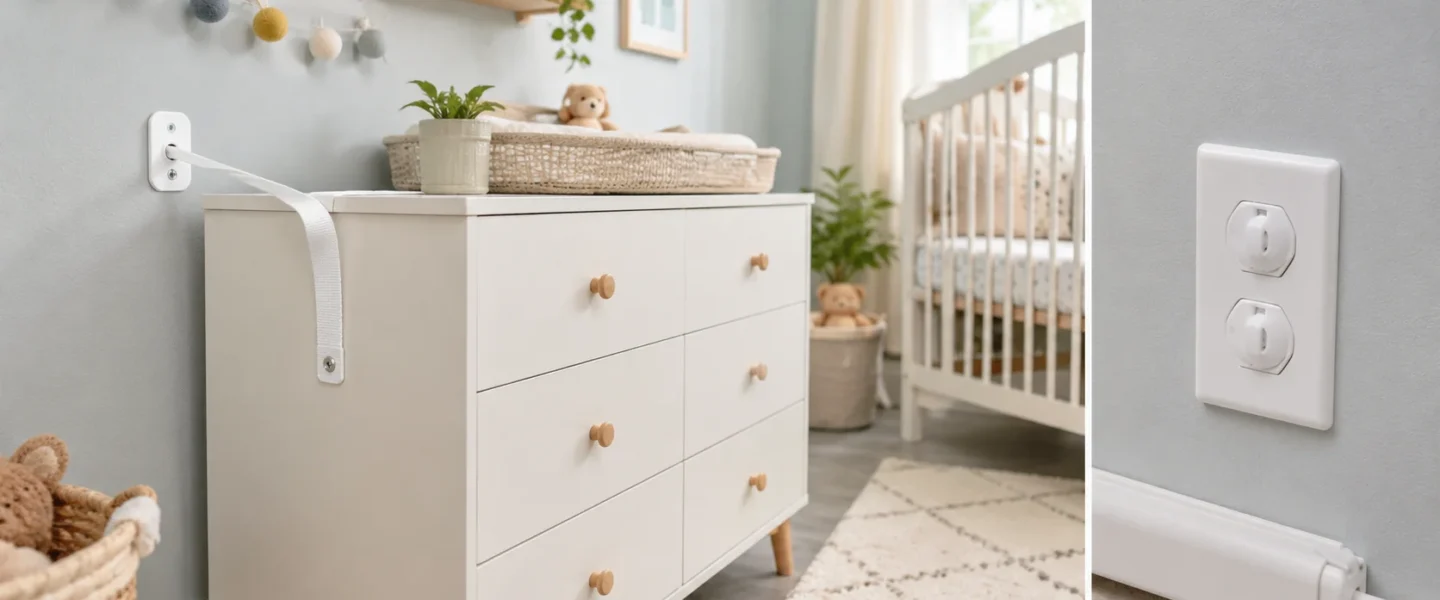
CPSC continues to urge families to anchor TVs and furniture such as bookcases and dressers to the wall to prevent tip-over injuries. It also recommends keeping tempting objects off furniture and heavier items on lower shelves. See CPSC’s Anchor It! guidance.
- Install the anti-tip device supplied with furniture or another appropriate anchoring system.
- Follow the furniture and anchor manufacturer’s installation instructions.
- Keep drawers closed when not in use.
- Do not store toys or other attractive items where a child may climb to reach them.
- Recheck anchors after moving furniture.
2. Keep the infant sleep space bare
CPSC’s current safe-sleep guidance says to use a product intended for infant sleep—such as a compliant crib, bassinet, play yard, or bedside sleeper—place the baby on their back, and keep the sleep space bare except for a fitted sheet. See CPSC Safe Sleep.
Keep pillows, loose blankets, bumpers, positioners, stuffed toys, and other soft objects out of an infant’s sleep space. Make sure the crib or bassinet is assembled with the correct parts and mattress.
When a baby outgrows a bassinet, our bassinet-to-crib transition guide explains how to use the product manual and developmental limits together.
3. Put monitor and electrical cords completely out of reach
Baby-monitor cords have caused strangulation deaths. CPSC advises keeping all monitor cords and monitor parts at least 3 feet away from babies and young children. See the CPSC warning on baby-monitor cords.
Route cords so a child cannot pull them into the crib or reach them from the floor. Apply the same thinking to lamps, chargers, sound machines, humidifiers, and other electrical items.
4. Review outlets and power strips
Use child-resistant outlet protection appropriate for your home’s electrical setup, keep power strips and extension cords inaccessible, and unplug devices that do not need to remain connected. Do not place liquid-filled devices where a spill could reach electrical equipment.
5. Make the changing area safe before the first surprise roll
The CDC’s diaper-changing guidance says to keep a hand on the child when using a changing surface. Set out diapers, wipes, cream, and clean clothes before you start so there is no reason to step away. See the CDC’s home diaper-changing steps.
Keep medicines, creams, nail tools, plastic packaging, diaper-pail refills, and other small or hazardous items out of reach.
6. Remove choking and ingestion hazards
Get down to floor level and look for what a baby could pick up: coins, button batteries, magnets, beads, hair accessories, loose hardware, toy parts, plastic tags, older siblings’ toys, or broken pieces.
Button batteries and high-powered magnets deserve particular care because swallowing them can cause severe injury. Store them securely and check battery compartments on toys and household devices.
7. Treat windows as a separate safety zone
CPSC advises moving cribs, beds, furniture, and toys away from windows and window-covering cords. Window screens are not fall-prevention devices. CPSC childproofing guidance recommends appropriate guards or stops where needed and keeping window openings limited when such devices are used.
Choose cordless window coverings where practical and never position climbable furniture under a window.
8. Secure wall decor and anything mounted over the crib
Avoid heavy frames, shelves, or objects directly over infant sleep spaces. Install wall items securely and remove mobiles or hanging items when the product instructions say they are no longer appropriate for your child’s developmental stage.
9. Check recalls and warnings
Before using a secondhand product, an item stored from an older child, or a product with missing instructions, check the CPSC recall database. Do not improvise repairs to cribs, bassinets, restraints, or other safety-critical baby products.
Nursery checklist
- Furniture anchored according to instructions.
- Crib or bassinet correctly assembled.
- Infant sleep space bare except for a fitted sheet.
- Monitor and electrical cords out of reach.
- Accessible outlets and power strips protected appropriately.
- Changing supplies within adult reach; medicines and creams inaccessible to children.
- Small objects, batteries, magnets, and plastic bags removed from reach.
- Crib and climbable furniture away from windows.
- Window-covering cords inaccessible.
- Wall decor secure and away from the sleep space.
- Older and secondhand gear checked for recalls.
Recheck after every major milestone
Babyproofing is not a one-time project. Recheck the room when your child starts rolling, sitting, crawling, pulling up, cruising, or climbing—and whenever furniture, electronics, toys, or new baby gear are added.
Bottom line
A safer nursery is less about buying “babyproofing products” and more about removing predictable hazards. Anchor furniture, keep the sleep space bare, control cords and windows, make changing routines safer, remove small hazardous items, and recheck the room as your baby develops.