A baby room humidifier can be useful when indoor air is genuinely dry, but it is not something every nursery needs to run every night. The goal is simple: add enough moisture to make dry air more comfortable without creating a damp room, a dirty water tank, or a burn hazard.
The American Academy of Pediatrics’ HealthyChildren guidance recommends a cool-mist humidifier rather than a steam vaporizer around children because hot water and steam can cause burns. The U.S. Environmental Protection Agency (EPA) also warns that excess humidity and poorly maintained humidifiers can encourage mold, dust mites, and microorganisms. In other words, the safest humidifier is one you can monitor and clean consistently.
Table of Contents
When does a baby room humidifier help?
A humidifier makes the most sense when the room is dry enough to cause discomfort, especially during heating season or in a dry climate. Dry indoor air can contribute to dry lips, skin, nose and throat discomfort. HealthyChildren notes that a pediatrician may sometimes recommend a cool-mist humidifier when nursery air is extremely dry, and it may make a stuffy nose feel more comfortable during a cold.
That does not mean higher humidity is always better. The EPA recommends keeping indoor relative humidity at 50% or below. If you see condensation on windows or walls, damp fabric, or moisture collecting around the machine, the room is already getting too wet.
A small hygrometer is more useful than guessing. It lets you see whether the nursery is actually dry before turning the humidifier on and helps prevent over-humidifying the room.
Cool mist vs. warm mist for a nursery
For a baby’s room, cool mist is generally the safer choice because there is no tank of boiling water or hot steam that could cause a scald injury if the unit is knocked over or touched. HealthyChildren specifically recommends cool-mist humidifiers or vaporizers to avoid burns.
Different cool-mist designs work differently. Ultrasonic and impeller humidifiers can disperse minerals and microorganisms from the water tank into the air if they are not maintained well. Evaporative models use a fan and a wet wick or filter and generally release less mineral dust, but the wick still needs regular replacement or cleaning according to the manufacturer.
The best type is therefore not simply the one with the biggest tank or the most features. It is the one you can clean easily, keep out of reach, and operate at the correct humidity level.
Where should you place a baby room humidifier?
Place the machine on a stable surface where a baby or toddler cannot reach it, pull its cord, or knock it over. Keep it away from the crib, bedding, curtains, upholstered furniture, books, and walls that could stay damp from direct mist.
If the area around the unit becomes wet, reduce the output, move the machine farther away, or run it intermittently. The EPA specifically advises against allowing carpets, drapes, tablecloths, or other absorbent materials around a humidifier to become damp.
For the rest of the room, our nursery babyproofing checklist covers cord placement, furniture tip-over risks, sleep-space hazards, and other issues that matter as your baby becomes mobile.
How much humidity is safe?
Do not use the mist output as your guide. Use room humidity. The EPA recommends not exceeding 50% relative humidity because higher humidity can support the growth of mold, dust mites, and other biological organisms.
If windows start fogging, walls feel damp, or the room develops a musty smell, reduce humidifier use and address the moisture problem. The CDC similarly recommends keeping indoor humidity no higher than 50% to help limit mold growth.
A humidifier should make a dry room more comfortable, not turn the nursery into a humid environment.
What water should you use?
Follow the manufacturer’s instructions first. For ultrasonic and impeller humidifiers, water with fewer minerals can reduce scale and the white mineral dust that may be released into the air. The EPA recommends low-mineral water, and the CDC notes that distilled water or water that has been boiled and then cooled can further reduce germ growth in portable humidifiers.
Do not add essential oils, fragrance, medication, or cleaning chemicals to the water unless the manufacturer explicitly says the unit is designed for that substance. A water tank is not automatically an aromatherapy diffuser or medication device.
How often should you clean a baby room humidifier?
This is the part that matters most. Water that sits in a tank can support microbial growth, and some humidifiers can then disperse those organisms into the room.
- Every day: empty the tank, remove standing water, wipe or air-dry wet surfaces, and refill with fresh water.
- Regularly: clean the unit exactly as the manufacturer directs. The EPA’s portable-humidifier guidance recommends cleaning every third day.
- After cleaning: rinse thoroughly so cleaning or disinfecting residue is not released into the air.
- Before storage: clean the machine and let all parts dry completely.
The CDC also advises emptying portable humidifiers daily, cleaning them according to manufacturer instructions, and allowing them to air dry after cleaning.
Can a humidifier make a baby sick?
A properly maintained humidifier is not inherently unsafe, but a dirty humidifier or an overly damp room can create avoidable problems. The EPA notes that ultrasonic and impeller humidifiers can disperse microorganisms and minerals from their tanks. Excess indoor moisture can also contribute to mold growth.
If you notice visible mold, a musty smell, persistent condensation, or damp surfaces, stop adding moisture and fix the underlying problem. The CDC recommends keeping indoor humidity at or below 50% and addressing moisture sources when mold appears.
If your baby has breathing difficulty, persistent wheezing, fever, signs of dehydration, or symptoms that concern you, a humidifier should not replace medical advice. Contact your pediatrician or another qualified healthcare professional.
Does a humidifier make sleep safer?
No. A humidifier is a comfort device, not a safe-sleep device. It does not replace a firm, flat sleep surface, a correctly used crib or bassinet, or other established safe-sleep practices.
If you are setting up the room for sleep, see our baby sleep guide and our guide to choosing a bedside bassinet. Keep humidifier cords and the unit itself well away from the sleep space.
A simple nursery humidifier checklist
- Use it because the room is dry, not simply because it is nighttime.
- Choose cool mist around young children to reduce burn risk.
- Measure humidity with a hygrometer and keep the room at 50% RH or below.
- Place the unit on a stable surface away from the crib and absorbent materials.
- Empty and refresh the water daily.
- Clean the machine on schedule and let it dry between uses.
- Use low-mineral water when the manufacturer recommends it.
- Stop or reduce use if you see condensation, dampness, or mold.
Bottom line
A baby room humidifier can be helpful when the air is truly dry, but more moisture is not automatically better. Use a cool-mist model, monitor the room rather than guessing, keep relative humidity at or below 50%, and treat cleaning as part of normal use rather than an occasional chore.
Sources: American Academy of Pediatrics / HealthyChildren; U.S. EPA — Use and Care of Home Humidifiers; CDC — Preventing Waterborne Germs at Home; CDC — Mold.
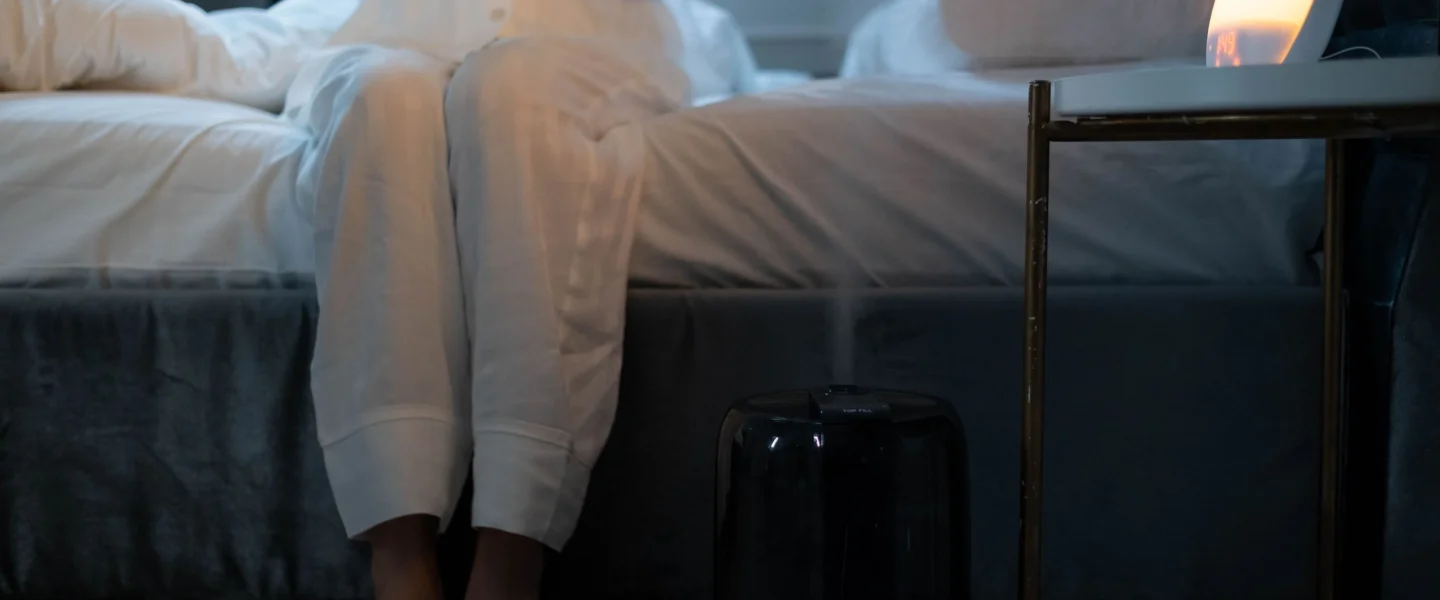
Featured image: cottonbro studio / Pexels.