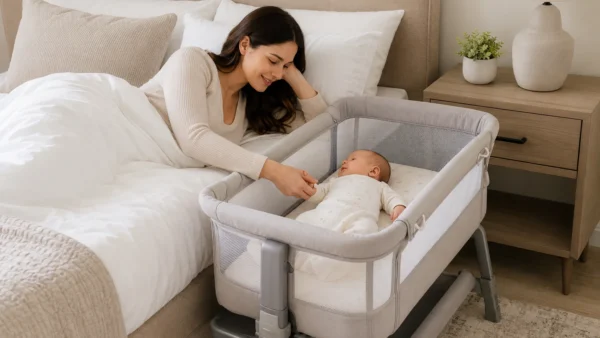
There is no universal age or weight at which every baby must leave a bassinet. The correct stop-use point comes from the exact bassinet’s manual. Some products use weight limits; others also specify age, height, rolling, pushing up, or another developmental milestone.
Move your baby before the product’s stated limit is exceeded. If you cannot identify the bassinet or confirm its instructions, do not guess about a safety-critical limit.
Quick answer
Check the manual now rather than waiting until the bassinet looks obviously too small. If your baby has reached any stop-use condition listed by the manufacturer—or the product is damaged, unstable, missing parts, or recalled—stop using it and move to another compliant infant sleep space.
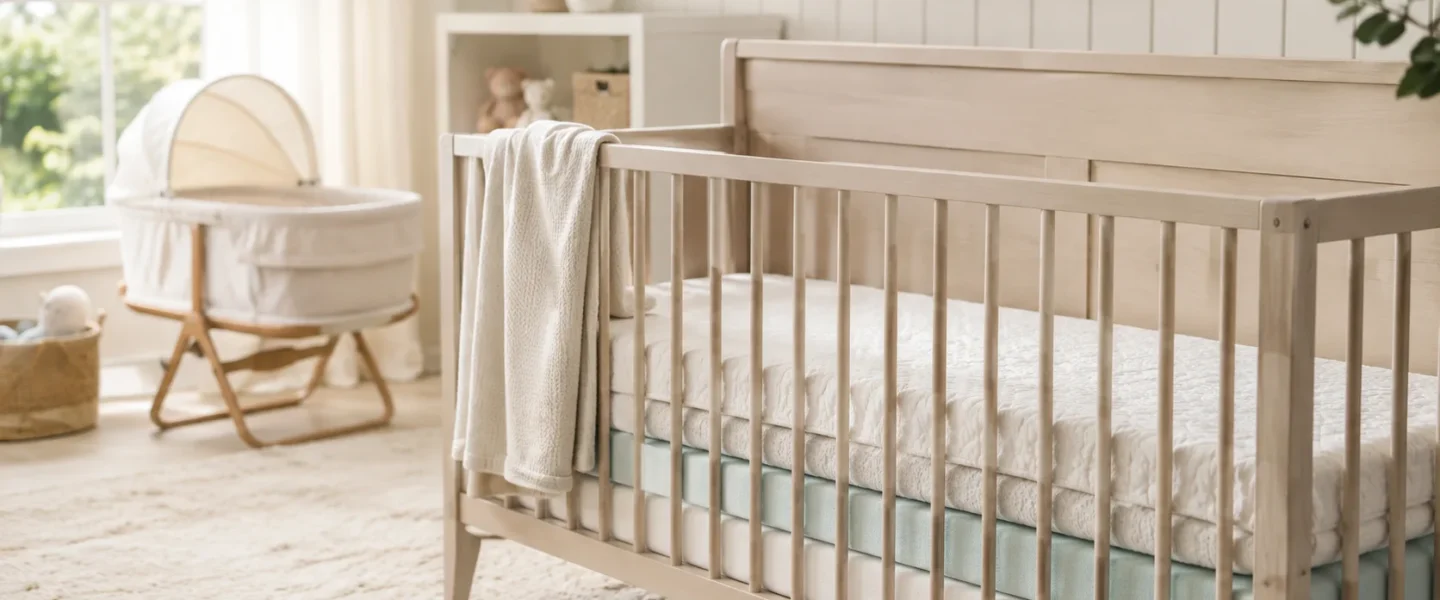
A properly assembled crib that meets current safety requirements can be used from birth. CPSC lists cribs, bassinets, play yards, and bedside sleepers that meet federal requirements as products intended for infant sleep. See CPSC Safe Sleep.
Signs it is time to check the bassinet manual immediately
- Your baby is near the stated weight or size limit.
- Your baby has reached a rolling, pushing-up, sitting, or other developmental condition named in the manual.
- The bassinet is damaged, unstable, torn, missing hardware, or cannot be assembled exactly as instructed.
- The product has been recalled or you cannot verify what model it is.
Do not use a friend’s timeline as a substitute for the manual. Two bassinets can have different stop-use instructions even if they look similar.
Safe-sleep rules do not change in the crib
The AAP recommends placing infants on their backs for sleep on a firm, flat, non-inclined surface intended for infant sleep. Keep pillows, blankets, bumpers, positioners, stuffed toys, and loose bedding out of the sleep space.
See the AAP’s safe-sleep recommendations.
Make sure the crib is correctly assembled with the mattress intended for that crib and a snug fitted sheet. Check the CPSC recall database, particularly for secondhand or older products.
Room sharing and the crib are separate decisions
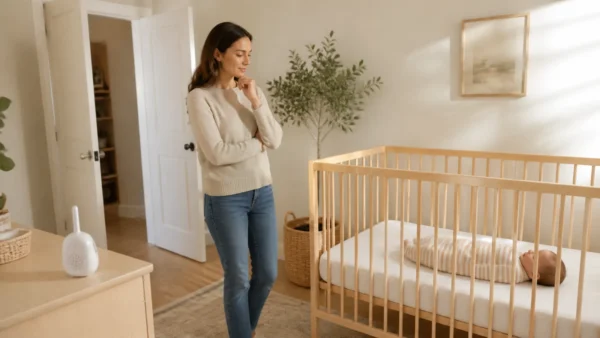
Moving from a bassinet to a crib does not necessarily mean moving the baby to a separate room. The AAP recommends room sharing without bed sharing for at least the first six months. If space allows, some families move a crib or appropriate portable sleep space into the parents’ room before moving the baby to a nursery.
The safe-sleep environment matters more than whether the crib is in one room or another.
How to make the transition simpler
Set up the crib before the bassinet is outgrown
Assemble it according to the instructions, choose the correct mattress height, and check the fitted sheet before you need the crib urgently.
Keep familiar bedtime cues
If you already use a short bedtime routine, keep it. The sleep space can change without changing every other part of the evening at once.
Do not make the crib “cozier” with unsafe items
Avoid adding pillows, loose blankets, bumpers, wedges, positioners, or stuffed toys to make the crib feel smaller.
Expect the new space to feel different
Some babies adjust quickly; others take time. A period of unfamiliarity is not a reason to return to an outgrown bassinet or add unsafe sleep accessories.
What if baby rolls in the crib?
Continue placing your baby on their back at the start of every sleep. If you have questions about rolling, swaddling, or your baby’s development, ask your pediatrician. Do not use a positioner to hold a baby in place.
What if baby falls asleep somewhere else?
CPSC advises moving a sleeping infant to a crib, bassinet, play yard, or bedside sleeper if they fall asleep in a product that is not intended for infant sleep. Swings, bouncers, loungers, and other seated or inclined products should not become routine sleep spaces.
Nursery safety after the move
Once the crib is in use, check the area around it too: cords, monitor cameras, windows, furniture, wall decor, and reachable objects. Our nursery babyproofing checklist covers those hazards.
Bottom line
Move from a bassinet based on the exact product’s stop-use instructions, not a universal age from the internet. A crib can be used from birth when it meets current safety requirements and is assembled correctly. Keep the sleep surface firm, flat, and bare, and make the transition before the bassinet is no longer appropriate for your baby’s size or development.