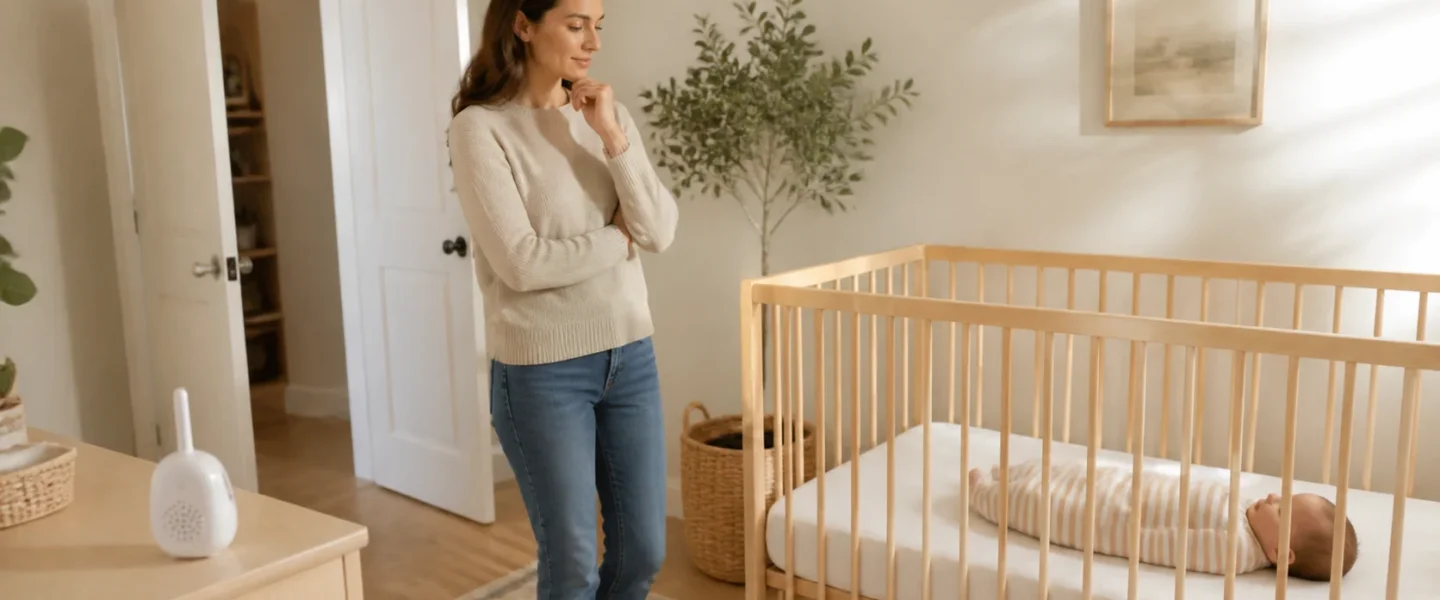
A baby monitor can be useful, but it is not an essential safety device for every family. The right question is whether a monitor solves a real distance or hearing problem in your home without creating cord hazards, privacy problems, or a false sense of security.
Start with the sleep environment first. A monitor cannot make an unsafe sleep setup safe.
When a monitor may genuinely help
A monitor can be useful when your baby naps or sleeps somewhere you cannot easily hear them, when your home has multiple floors, or when another caregiver needs a reliable way to hear waking or crying without repeatedly entering the room.
If your only need is sound, an audio monitor may be enough. Video is useful when visual checks solve a specific problem, but more features are not automatically better.
When you may be fine without one
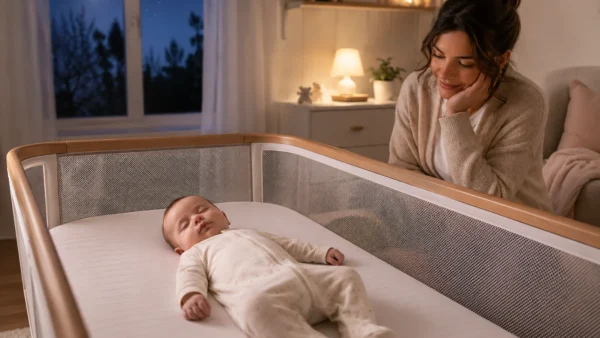
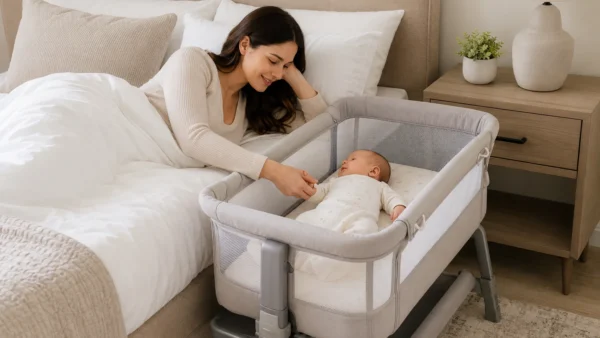
If your baby sleeps in a separate crib or bassinet in your room and you can hear them easily, you may not need a monitor during that stage. The AAP recommends room sharing without bed sharing for at least the first six months as part of its safe-sleep guidance. See HealthyChildren’s safe-sleep recommendations.
A small home, an open layout, or a monitor that makes you watch every movement instead of sleeping are other reasonable reasons to keep the setup simple.
Safe sleep matters more than monitoring
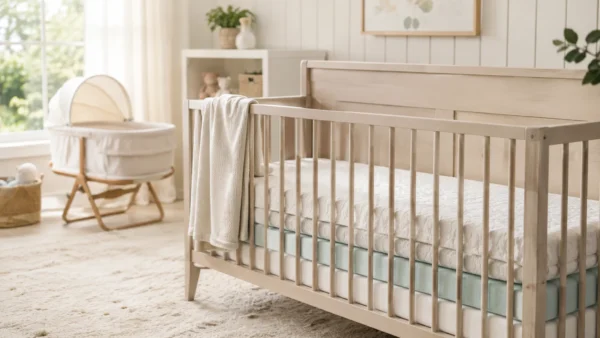
For infants, use a firm, flat, non-inclined sleep surface intended for infant sleep; place the baby on their back; and keep pillows, loose blankets, bumpers, positioners, and soft objects out of the sleep space. A camera does not change those rules.
If a monitor seems reassuring enough that it encourages unsafe sleep practices, the monitor is creating the wrong kind of confidence.
Keep cords at least 3 feet away
CPSC warns that baby-monitor cords can present a strangulation hazard and says all cords and monitor parts should be kept at least 3 feet away from babies and young children. See CPSC’s monitor-cord warning.
Do not place a corded camera on a crib rail or run a cord along the crib. Recheck placement when your baby starts rolling, crawling, pulling up, or when furniture is moved.
Our nursery babyproofing checklist covers cords, furniture, windows, and sleep-space hazards together.
Wi-Fi monitors create a privacy job
Connected cameras can offer remote access, but that convenience means you need to maintain account and network security. Use a strong unique password, keep camera and router software updated, turn on available security features, and review who has access to the feed.
If you do not need remote viewing, a non-Wi-Fi monitor with a dedicated parent unit may reduce the number of connected services you have to manage.
Do not treat consumer monitors as SIDS prevention
The FDA states that it has not cleared or approved any baby product to prevent or reduce the risk of SIDS. In September 2025, the FDA also warned consumers about unauthorized infant devices marketed for monitoring vital signs such as heart rate, oxygen saturation, breathing, or temperature; inaccurate readings can lead to unnecessary care or delayed treatment.
See the FDA’s 2025 infant-monitor safety communication.
If a clinician has prescribed or recommended medical monitoring for your baby, follow that medical plan. That is different from using a consumer nursery monitor.
A simple decision guide
- You can hear baby easily: start without a monitor if you prefer.
- You mainly need to hear waking: consider audio.
- You need visual checks without entering the room: consider video.
- You need remote access outside the home: consider Wi-Fi, with the added privacy/security responsibilities.
- You want health reassurance: do not substitute an unauthorized consumer vital-sign monitor for medical advice or safe-sleep practices.
Questions to ask before buying
- What exact problem will this monitor solve?
- Can every cord and component be positioned safely out of reach?
- Do I actually need video or remote access?
- Will I maintain passwords and software updates?
- Will notifications help me rest, or make me check constantly?
Bottom line
You do not need a baby monitor simply because it appears on registry lists. Start with safe sleep and a safer nursery. Add a monitor when it solves a genuine distance, hearing, or caregiving problem—and choose the simplest setup that does the job safely.