
A single parent baby registry should make the first months easier to manage—not create a room full of products that need charging, washing, assembling, or storing.
Start with the jobs that happen every day: safe sleep, transport, feeding, diapering, clothing, and getting out of the house. Then add convenience items only when they solve a real problem in your home.
1. Start with a safe sleep space
The American Academy of Pediatrics recommends placing infants on their backs for sleep on a firm, flat, non-inclined surface designed for infant sleep, with soft objects and loose bedding kept out of the sleep space. Room sharing without bed sharing is recommended for at least the first six months. Read the AAP’s current safe-sleep guidance.
For a registry, that means prioritizing a compliant crib, bassinet, portable crib, or play yard that fits your living space, plus fitted sheets made for that exact sleep surface. Decor can wait.
2. Choose the car seat for your child and your vehicle
NHTSA recommends selecting a car seat based on the child’s age and size, checking that it fits the vehicle, and using the seat according to both the car-seat instructions and the vehicle owner’s manual. See NHTSA’s car-seat guidance.
If you use a small car, rideshare, or relatives’ vehicles, think about who will install the seat, how often it needs to move between cars, and whether every regular caregiver can use it correctly.
3. Keep diapering small and refillable
Register for starter quantities instead of months of one diaper size. Fit, growth, and skin tolerance vary. A wipeable changing surface, diapers, wipes or cloths, barrier cream, a secure trash plan, and spare clothes cover most early needs.
Our guide to saving on diapers explains how to compare cost without stretching hygiene or rash care.
4. Pick feeding supplies you can actually clean
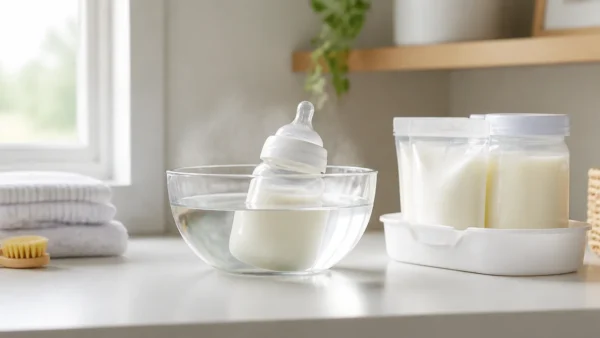
Whether your baby receives breast milk, formula, or both, start with a manageable number of feeding items. Buying twenty bottles before you know what works for your baby can create more washing and waste.
If you use bottles, make sure you have a clean drying area and a cleaning routine that follows current guidance. See our CDC-based bottle cleaning and sanitizing guide.
5. Choose one practical mobility plan
You may eventually want both a stroller and a carrier, but you do not have to solve every future outing before birth. Think about your actual week: stairs, public transport, trunk space, grocery trips, medical appointments, neighborhood walks, and whether another adult will regularly help.
If you use a carrier, follow its instructions carefully and make sure the carrier is appropriate for your baby’s current size and developmental stage.
6. Prioritize items that simplify one-handed tasks
When one adult is doing most of the care, small usability details matter. Easy-open storage, zip sleepers, a bag you can reach into without unpacking everything, and supplies stored at the point of use may help more than a complicated gadget.
Do not assume “smart” means easier. Apps, charging, subscriptions, proprietary refills, or multiple parts can add work.
7. Treat secondhand safety gear differently
Secondhand clothing, books, and some simple household items can be useful. Safety equipment needs more scrutiny.
Before using older or secondhand baby gear, check the CPSC recall database, make sure all parts and labels are present, and confirm the product can still be used according to its current instructions. For car seats, unknown crash history or missing labels/instructions is a major reason to avoid a used seat.
8. Make the registry help-friendly
Use notes to explain what would actually help. A relative may be happy to buy a practical item when they understand why it matters. Group-gift options can make expensive essentials easier to fund without filling the list with low-priority extras.
Consumables can also be useful, but avoid asking for huge quantities in one size or brand before you know what works.
9. Keep a “later” list
Toys for later stages, extra seats, feeding equipment for solid foods, travel accessories, and toddler products do not all need to be purchased before birth.
A later list protects the budget and gives you time to learn your baby’s preferences, your recovery needs, and what your household actually lacks.
A focused first-month registry
- One compliant infant sleep space and fitted sheets.
- A correctly selected car seat.
- Starter diapering supplies.
- A small, washable feeding setup.
- Basic season-appropriate clothing.
- One practical way to move baby through errands and appointments.
- A thermometer and other basic care items recommended by your pediatrician.
- Secure storage for medicine, cleaning products, cords, and small objects.
- A short list of items that can wait.
Bottom line
A useful single parent baby registry is not the longest list. It is a small, safe setup that reduces repeated work when there is only one adult available. Start with the essentials you will use every day, verify safety information for the exact products you choose, and let the rest of the registry grow after you know what your real routine looks like.