Quick answer: Start brushing your baby’s teeth as soon as the first tooth appears. Use a small, soft-bristled toothbrush and a rice-grain-sized smear of fluoride toothpaste. Gently clean the visible tooth surfaces twice daily, especially before bed. A calm, repeatable routine matters more than an expensive oral-care kit.
Knowing how to brush baby teeth can feel confusing when there is only one tiny tooth to clean. How much toothpaste is safe? What if your baby clamps their mouth shut? Do finger brushes count? This guide offers practical steps based on pediatric and dental guidance. For a separate explanation of tooth eruption and discomfort, read our baby teething guide.
When should you start brushing a baby’s teeth?
Start when the first tooth breaks through the gum. The American Academy of Pediatrics and NHS recommend brushing from the first tooth. You do not need to wait for a full set of teeth, the first birthday, or the start of solid foods.
Before teeth emerge, you can gently wipe the gums with a clean, damp, soft cloth if your baby tolerates it. This can help introduce mouth care, but it is not a replacement for toothbrushing once teeth are present. Avoid scraping the tongue or forcing cleaning to remove a normal milk coating. Persistent white patches, pain, or feeding difficulties deserve a healthcare professional’s assessment.
Some babies get teeth earlier or later than others. The brushing start date depends on tooth eruption, not a fixed age. Ask a pediatrician or dentist if you have concerns about delayed eruption or unusual tooth appearance.
Choose a small, soft baby toothbrush
Look for a brush with a small head, soft bristles, and a handle an adult can control comfortably. The small head helps reach the front, back, and chewing surfaces without bumping sensitive gums. A simple manual brush is enough; a costly electric brush or specialty kit is not required.
Silicone finger brushes may help babies become familiar with oral care, especially before teeth arrive. Once teeth emerge, a soft-bristled toothbrush is the practical tool for cleaning tooth surfaces. Follow product age instructions and inspect the brush regularly for damage or loose parts. Never leave a baby alone with a toothbrush in their mouth.
How much fluoride toothpaste should you use?
For children younger than three, the AAP recommends a tiny smear of fluoride toothpaste no bigger than a grain of rice. For children ages three to six, use no more than a pea-sized amount. The CDC gives the same size limits and advises consulting a doctor or dentist about fluoride products for children under two. The small amount matters because babies cannot reliably spit out toothpaste.
The NHS recommends toothpaste with at least 1,000 ppm fluoride for young children. Fluoride exposure from water and professional recommendations vary by location. If you are unsure which toothpaste is appropriate in your area, ask your child’s dentist or pediatrician rather than choosing solely by a “baby” label. Do not use adult mouthwash, fluoride supplements, or prescription-strength dental products without professional advice.
Example: For a baby with two lower front teeth, put a barely visible rice-sized streak of suitable toothpaste on the bristles. A long ribbon covering the brush is too much. Keep the toothpaste tube out of reach so a toddler cannot squeeze out and eat extra paste.
How to brush baby teeth in six gentle steps
- Choose a calm moment. Wash your hands, have the brush ready, and avoid starting when your baby is extremely hungry or overtired.
- Support the head. Sit your baby on your lap with the head resting against your chest, as the NHS suggests. Another adult can help distract the baby if needed. Keep your child secure and comfortable.
- See the teeth. Gently lift the lip with a clean finger so you can see the tooth and gumline. There is no need to force the mouth wide open.
- Brush softly. Move the bristles in small circles over the front and back of each tooth. Clean along the gumline, and add the chewing surfaces as molars appear. Do not scrub hard.
- Make it predictable. Count the teeth, hum a short song, or let your baby watch you brush your own teeth. If your baby turns away, pause briefly and try again.
- Finish without a big rinse. Encourage spitting when your child becomes able. The NHS advises against rinsing with water immediately afterward because that washes fluoride away. A baby cannot spit on command, which is why the toothpaste smear must be tiny.
Older children are usually advised to brush for around two minutes twice daily. A baby with one tooth may need much less time. Aim to clean every tooth surface that exists and gradually build tolerance for a fuller routine.
How often should you brush—and what about nighttime feeds?
Brush twice a day: once in the morning or another convenient daytime moment, and once before sleep. The bedtime brush is especially valuable. Keep the toothbrush in a predictable location and make it part of a short routine—pajamas, toothbrushing, book, sleep—rather than another task to remember.
Young babies may still need breast milk or formula at night. Continue feeding according to your baby’s medical and developmental needs; do not withhold necessary feeds in the name of dental care. As your baby’s schedule changes, try to brush after the last evening milk when practical. Ask your pediatrician or dentist for advice if you are concerned about overnight feeds and dental health.
If your family is moving away from bottles, our guide to introducing open and straw cups explains age-appropriate practice and gradual transitions.
What to do if your baby refuses brushing
Some babies chew the brush, push it away, cry, or keep their lips firmly closed. Teething discomfort, tiredness, unfamiliar sensations, and a desire for independence can all contribute. Resistance is common and does not mean the routine has failed.
- Show rather than tell. Brush your own teeth in front of your baby and let them see the action.
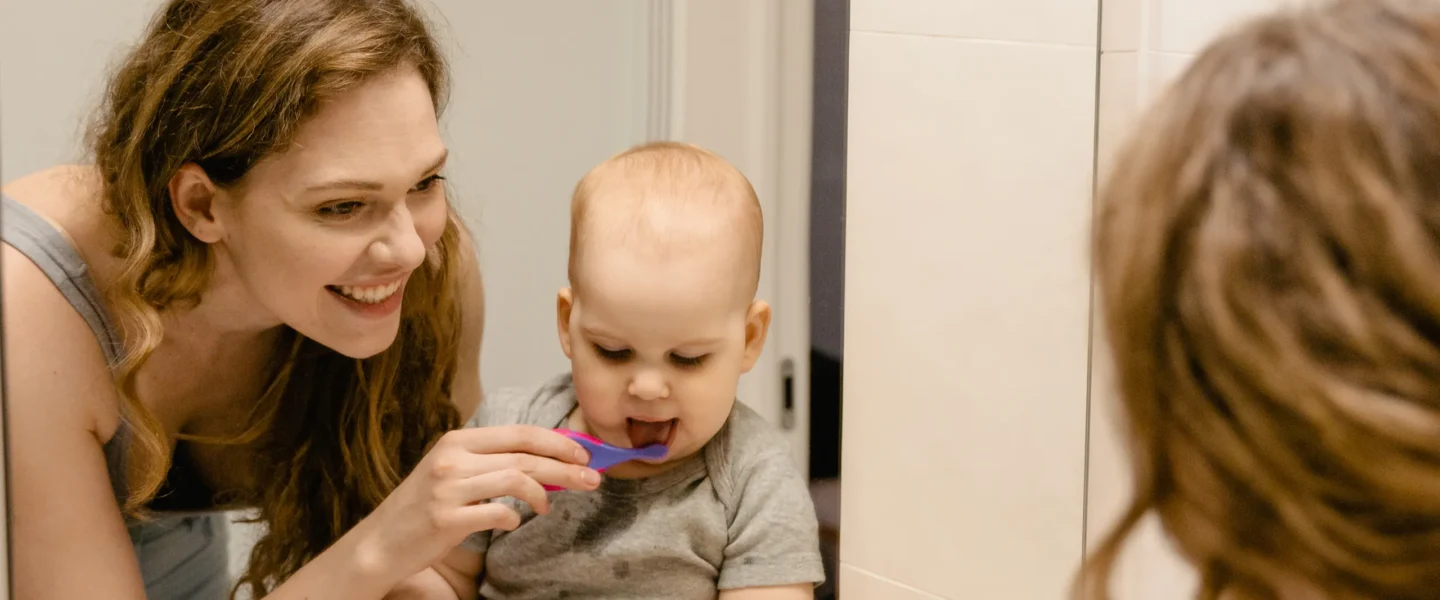
- Try a mirror. Older babies and toddlers may enjoy watching their reflection while you help.
- Offer a supervised turn. Let an older toddler hold a suitable brush briefly, then explain that it is the adult’s turn to finish.
- Use the same cue. A short song or phrase before brushing can make the experience predictable.
- Change the timing. If bedtime brushing always ends in tears, begin slightly earlier when your child is less tired.
- Ask for help when needed. A pediatric dentist can demonstrate a comfortable position and suggest strategies for children who consistently resist.
Do not wedge the mouth open with an object or scrub forcefully. Even when toddlers want to brush independently, an adult must do the thorough cleaning. The AAP says many children need hands-on brushing help until around seven or eight years of age.
Cleaning and replacing a baby toothbrush
Rinse the brush after each use and let it air-dry. Store it upright where it will not touch dirty surfaces or other people’s brush heads. Avoid keeping a wet brush sealed in a closed container for long periods. Each family member should have their own toothbrush.
Replace a brush when the bristles splay, become damaged, or feel rough. NHS Start for Life recommends replacing children’s toothbrushes about every three months, sooner if worn. Routine rinsing and drying are usually sufficient; sterilizing a toothbrush after every ordinary use is not required.
Food, drinks and the first signs of tooth decay
Brushing helps, but frequent sugar exposure also matters. Avoid sweetened drinks in baby bottles and never dip a pacifier in jam, sugar, or honey. Honey is unsafe for children under twelve months. Choose age-appropriate milk feeds and, when developmentally suitable, offer water with meals according to pediatric guidance.
Do not put a baby to bed with a bottle of juice or sweetened drinks. If your baby is starting solids, there is no need to add sugar to encourage eating. Our early-mealtime and high-chair safety guide covers supervised eating setups.
Watch for chalky white patches on teeth, brown spots, a visible hole, persistent sensitivity, or pain. These can have different causes, and a dentist should assess them. Do not wait for a scheduled checkup if your child has swelling, significant pain, or a dental injury.
When should your baby first visit the dentist?
The AAP recommends a first dental visit by the first birthday or within six months of the first tooth appearing. The visit can be brief: a dentist checks the mouth, discusses cavity risk and fluoride, demonstrates cleaning, and helps parents establish a preventive plan. Your pediatrician may also discuss fluoride varnish at routine visits.
Arrange an earlier appointment if you see tooth discoloration, pain, an injured tooth, gum swelling, or a tooth that seems unusually shaped. A dentist can help you understand what is normal and what needs treatment.
Frequently asked questions
Can I use fluoride-free baby toothpaste?
Major pediatric guidance recommends an age-appropriate tiny amount of fluoride toothpaste after the first tooth because fluoride helps prevent decay. If you have concerns about local fluoride exposure, discuss them with your dentist rather than relying on marketing claims.
Do babies need floss?
Floss becomes helpful when neighboring teeth touch and a brush cannot clean between them. Ask a pediatric dentist to demonstrate a gentle method. Do not force floss into gaps or tender gums.
What if the gums hurt during teething?
Continue gentle brushing but use a light touch. A cool, clean teething toy may help before brushing. See our teething article for safe comfort measures. Avoid teething necklaces and unapproved numbing products.
Can a baby brush their own teeth?
Babies can explore a suitable brush while supervised, but they cannot clean their teeth thoroughly on their own. An adult should perform the actual brushing. Continue helping as the child grows.
What if my baby swallows some toothpaste?
Babies often swallow part of the tiny smear, which is why the amount must be so small. Do not encourage swallowing or allow access to the tube. If a child swallows a large amount or develops symptoms, seek advice from a healthcare professional or local poison-information service.
A simple first-tooth checklist
- A soft-bristled toothbrush with a small head.
- Suitable fluoride toothpaste, used in a rice-grain-sized smear for children under three.
- A calm twice-daily routine with an adult doing the cleaning.
- A plan for the first dental visit by age one or within six months of the first tooth.
- Attention to sugary drinks and early changes in tooth appearance.
Consistency matters more than perfection. Start with the teeth you can see, keep your touch gentle, and build a routine that works for your family.
Sources and editorial note
This article is general educational guidance, not individual dental advice. Sources: AAP: Baby’s First Tooth; AAP: Good Oral Health Starts Early; NHS: Looking After Your Baby’s Teeth; NHS: Children’s Teeth; CDC: About Fluoride. Ask your child’s pediatrician or dentist about individual risks and local fluoride recommendations.
Featured photo: mother assisting her baby with a toothbrush at a bathroom mirror. MART PRODUCTION / Pexels, cropped for layout under the Pexels License.