Parents often say “sterilize” when they mean cleaning and sanitizing feeding equipment at home. The CDC separates those steps: cleaning removes milk and germs; sanitizing provides an additional germ-reduction step after cleaning.
For most feeding routines, the foundation is careful cleaning after every use. The CDC especially recommends daily sanitizing for babies who are younger than 2 months, were born prematurely, or have a weakened immune system.
See the CDC’s guidance on cleaning, sanitizing, and storing infant feeding items.
Step 1: Wash your hands and take everything apart
Wash your hands before handling clean feeding items. Separate the bottle, nipple, ring, cap, valves, and other removable parts so milk cannot stay trapped in small spaces.
Inspect parts as you clean them. Replace nipples or components that are cracked, torn, sticky, warped, or otherwise damaged according to the manufacturer’s instructions.
Step 2: Clean after every use
If washing by hand, the CDC recommends using a clean basin reserved for infant feeding items rather than placing bottle parts directly in the sink. Wash with soap and hot water using a clean brush, rinse thoroughly, and allow parts to air dry on a clean unused dish towel or paper towel.
Do not rub clean parts dry with a kitchen towel because towels can transfer germs.
Can the dishwasher clean bottles?
If the bottle parts are dishwasher-safe, follow the manufacturer’s instructions. The CDC notes that a dishwasher using hot water and a heated drying cycle—or a sanitizing setting—can clean and sanitize feeding items in one cycle.
Use a closed basket or mesh bag for small dishwasher-safe parts so they do not fall into the machine.
When should bottles be sanitized?
CDC guidance recommends sanitizing feeding items at least once a day for extra germ removal when a baby is under 2 months old, was born prematurely, or has a weakened immune system.
If your child’s healthcare team has given you a stricter routine because of a medical condition, follow that plan.
For older, healthy babies, careful cleaning after every use may be sufficient if the items have already been cleaned effectively, but families can continue sanitizing if they prefer and the product instructions allow it.
CDC-approved home sanitizing methods
Dishwasher with heated drying or sanitizing setting
Use this method only for items the manufacturer says are dishwasher-safe.
Boiling
After cleaning, the CDC’s current guidance uses 5 minutes of boiling for items that can safely be boiled. Check the bottle manufacturer’s instructions first because not every component is designed for that heat.
Steam
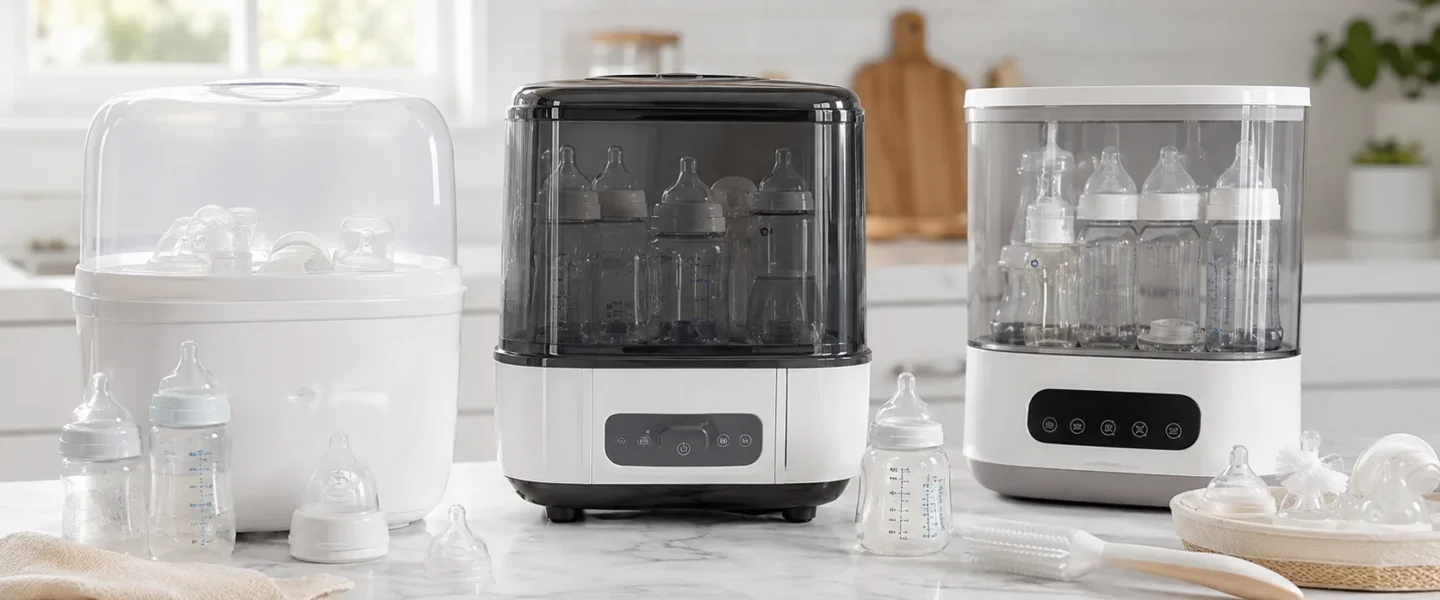
Use a microwave or plug-in steam system according to the equipment and bottle manufacturer’s directions. Steam can burn, so allow items to cool and open devices carefully.
Do not invent sanitizing temperatures or cycle times. Follow the current CDC method and the instructions for the exact feeding product you own.
Let everything air dry completely
Place clean items in a protected drying area and let them air dry. Once fully dry, store them in a clean protected cabinet, container, or drawer.
Do not seal damp parts in a container. Moisture makes it harder to keep stored feeding equipment clean.
What about breast-pump parts?
Pump parts that contact breast milk also need careful cleaning and storage. Follow the pump manufacturer’s instructions and the CDC’s current pump-cleaning guidance.
If you are storing expressed milk, our guide to warmed breast-milk timing follows current CDC storage rules.
What about formula bottles?
Clean bottle parts after each use. Do not save prepared formula left in a bottle after a feeding; formula has its own preparation and storage rules because bacteria from a baby’s mouth can enter the bottle during feeding.
Use the CDC’s current infant-formula guidance if you prepare formula, particularly for babies who are younger than 2 months, premature, or immunocompromised.
Travel and childcare
When traveling, bring enough clean feeding items for the routine you expect and a way to keep clean and dirty parts separate. If safe water is uncertain, follow local advisories and public-health guidance rather than assuming tap water is safe.
If bottles go to childcare, follow the facility’s labeling and storage requirements as well as your usual safe handling routine.
Common mistakes
- Sanitizing without cleaning milk residue first.
- Putting bottle parts directly in a dirty sink when washing by hand.
- Drying clean parts with a used kitchen towel.
- Boiling parts that the manufacturer says should not be boiled.
- Guessing sanitizing times instead of following CDC and manufacturer instructions.
- Storing parts while they are still wet.
- Continuing to use cracked, torn, or damaged feeding parts.
Bottom line
Clean every feeding item thoroughly after use, let parts air dry, and sanitize when current CDC guidance or your baby’s healthcare team recommends it. For babies younger than 2 months, babies born prematurely, and babies with weakened immune systems, daily sanitizing provides extra germ protection. The exact product manual still matters, especially for boiling, dishwasher, microwave, and steam methods.