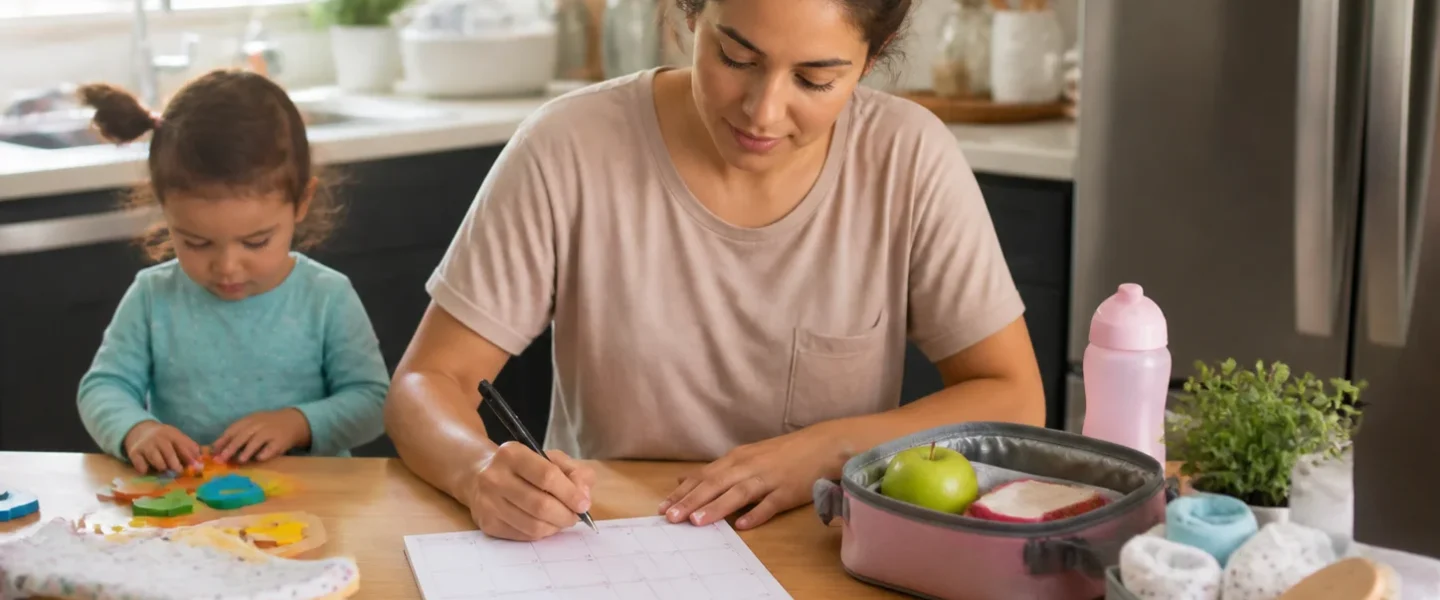
Single parenting creates a particular kind of workload: one adult may be remembering school messages, meals, appointments, laundry, bedtime, forms, transport, and tomorrow’s bag at the same time. The most useful “hacks” are not clever tricks. They are small systems that remove decisions from parts of the day you repeat constantly.
You do not need all nine ideas below. Pick the one part of the day that regularly falls apart, make that easier first, and build from there.
1. Create three daily anchors
Choose one short routine for the morning, one for the after-school or daycare transition, and one for bedtime. Keep each anchor simple enough to remember on a tired day.
- Morning: clothes, breakfast, bag, shoes.
- After school or daycare: wash hands, snack, papers in one place, tomorrow items together.
- Bedtime: wash up, pajamas, book, lights.
When a step does not need a fresh decision, make it visible. Put tomorrow’s clothes in one place. Keep shoes near the exit. Store the daycare or work bag where you naturally pass it on the way out.
2. Use a launch zone and a recovery zone
A whole-home organization system can become another project to manage. Two zones are enough for many families.
The launch zone holds things that must leave the house: backpacks, daycare sheets, bottles, library books, sports gear, work items, or paperwork. The recovery zone holds what came home and needs attention before the next day.
For a baby or toddler, a basket may be enough. For an older child, a hook and a tray can do the same job. The goal is not a perfect entryway. It is knowing where repeated items belong.
3. Build a default meal pattern
Meal planning does not have to mean planning seven unique dinners. A default pattern reduces the number of food decisions you make during a busy week.
Choose a few dependable breakfasts, lunches, quick dinners, and one backup meal that can live in the freezer or pantry. New meals can still happen when you have the time and energy; the default meals are there for ordinary hard days.
If you are feeding a baby or child with allergies, medical needs, swallowing concerns, or a prescribed diet, build the routine around the advice you have received from the child’s healthcare team.
4. Keep caregiver information in one place
When a grandparent, babysitter, school, or daycare needs information quickly, a single shared note can save repeated explanations. Include the details another responsible caregiver may genuinely need, such as emergency contacts, allergies, pediatrician information, pickup rules, medication instructions that have been provided by a clinician, and the child’s usual routine.
For U.S. families comparing childcare options or checking childcare safety information, ChildCare.gov provides official consumer resources. Keep a printed copy of your family’s essentials somewhere sensible in case a phone is unavailable.
5. Make one calm-activity basket
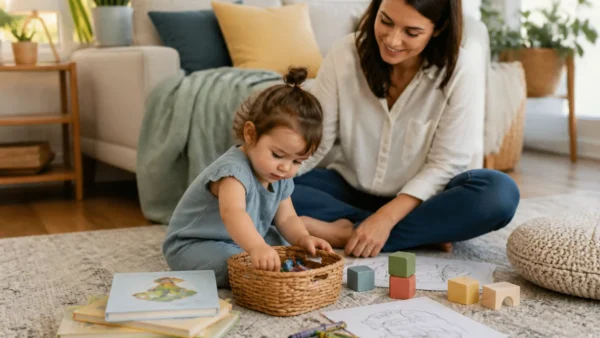
A small activity basket can help during cooking, a work call, feeding a younger baby, or another short household task. Keep the contents appropriate for your child’s age and development, and supervise whenever an activity includes small pieces, art materials, or anything a young child could mouth.
Good options can include board books, washable chunky crayons, large stickers, simple puzzles, or a few pretend-play items. Our guide to screen-free toddler activities has more low-setup ideas.
6. Do a ten-minute reset instead of a giant cleanup
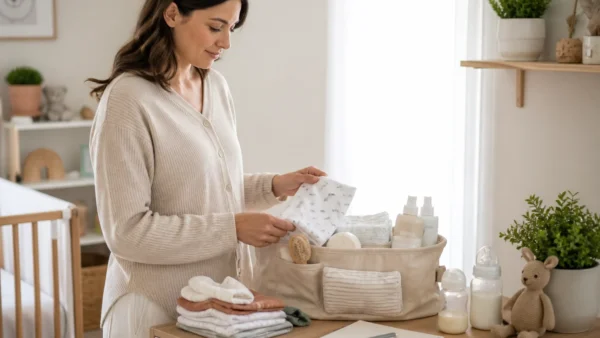
Pick a regular time and reset only the areas that affect tomorrow. That might be the kitchen counter, the diaper station, the entry area, or school bags.
Children can join in with tasks that match their abilities: putting soft toys in a bin, matching shoes, choosing tomorrow’s clothes, or putting books back in a basket. The routine should be short enough that it does not become another battle at the end of the day.
7. Keep a practical backup bag
A small backup bag can cover predictable inconveniences without turning into a survival kit. Depending on your child’s age and your routine, it might contain a clean change of clothes, diapers and wipes, a suitable snack, a charging cable or power bank, and a simple activity for waiting rooms.
Check it regularly so clothing still fits and food has not expired. If you keep medicines or first-aid products in a travel bag, store them securely and use them only according to their current instructions.
8. Write down your backup plan before a hard day
It is difficult to build a support plan while you are already dealing with an emergency pickup, illness, transport problem, or childcare closure. Make a short list of the people and services you could contact for specific situations.
For U.S. families, USA.gov’s child care resources can help point you toward government information and assistance programs.
9. Protect a small amount of recovery time
“Self-care” can sound unrealistic when one adult is responsible for everything. Think smaller. Recovery time can be a quiet shower, a short walk, an early night, ten minutes with a book, or a phone call with someone you trust.
Put one realistic recovery habit into the week before filling every available gap with another chore. It does not need to be impressive to be useful.
When a routine keeps failing
Change the system before blaming yourself. A routine may simply have too many steps, happen too late, depend on items stored in the wrong place, or require more energy than your household has at that time of day.
Reduce one decision. Move one item. Drop one unnecessary step. Then test the simpler version for a week.
Bottom line
The best single parent hacks make repeated parts of family life easier to carry. Start with one daily anchor, one launch zone, one default meal pattern, and one small backup plan. A system is useful when it quietly removes work from tomorrow—not when it gives you another standard to maintain.