Screen-free toddler activities do not need to look like a preschool classroom. The activities families repeat are usually the simple ones: books on the floor, crayons at the table, a walk outside, pretend play, sorting laundry, or a small puzzle while dinner is being prepared.
The American Academy of Pediatrics’ current media guidance asks families to think about what media may be crowding out—such as play, movement, reading, outdoor time, conversation, and sleep—rather than relying only on a single screen-time number. See the AAP’s 5 C’s guidance for toddlers and preschoolers.
Safety note: Match every activity to your child’s development. Toddlers who still mouth objects need close supervision and materials that are too large to become choking hazards. Keep button batteries, magnets, beads, coins, balloons, small toy parts, and other hazardous small items out of reach.
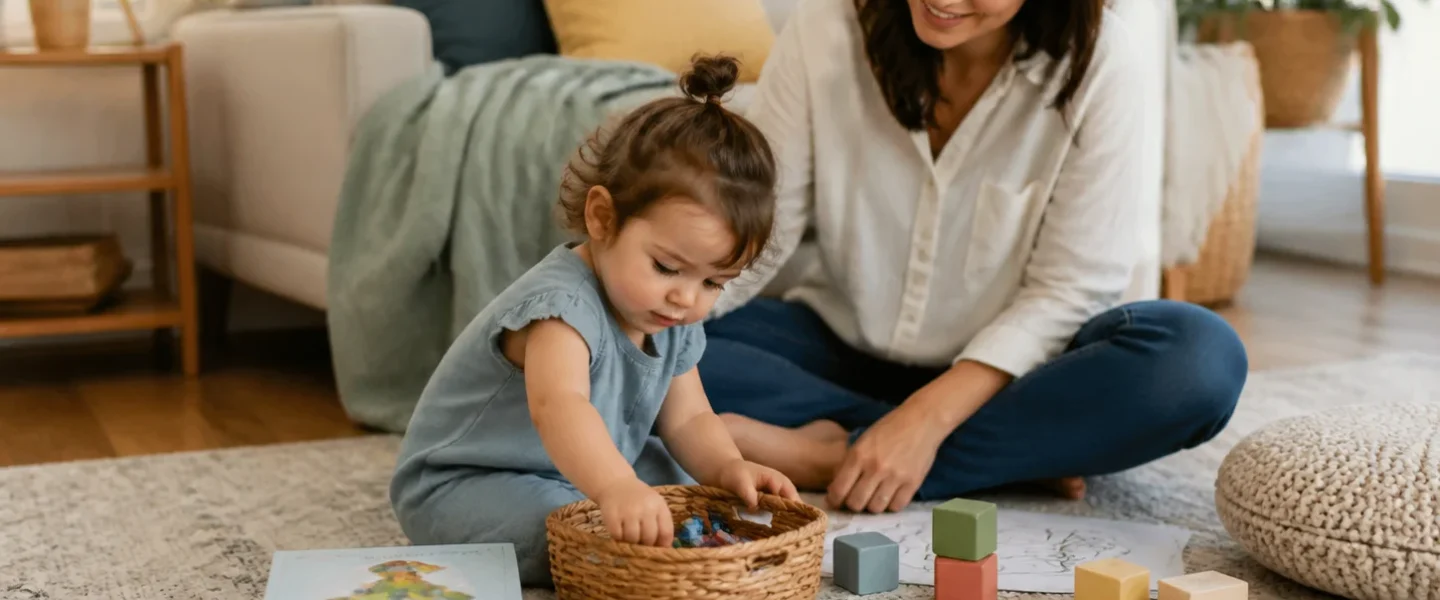
1. Make a small quiet-time basket
Choose a basket with just a few options: board books, washable chunky crayons, a simple puzzle, large stickers, and one or two pretend-play items. A smaller set is easier to reset and makes choosing less complicated.
Rotate items occasionally instead of putting every toy out at once.
2. Color without turning it into a lesson
Give your child large paper and age-appropriate washable crayons. Scribbling, choosing colors, and making marks are enough. The goal is not staying inside lines.
Fine-motor activities such as drawing and manipulating safe art materials can support skills children later use for dressing, eating, and writing. Keep sessions short if your toddler loses interest quickly.
3. Build a book basket by mood
Instead of one crowded bookshelf, try a small basket for a particular part of the day: bedtime books, animal books, silly books, or books about feelings. Let your child choose between two or three.
Reading together also creates natural language practice without needing a formal activity.
4. Use large stickers for sorting and storytelling
Large toddler-appropriate stickers can become a simple sorting activity. Put animals on one side of the paper and vehicles on the other, or ask your child to make a picture.
Remove backing scraps immediately and supervise closely if your child still puts non-food items in their mouth.
5. Choose a toddler-safe sensory activity
Sensory play does not require water beads, tiny pom-poms, dry beans, beads, or other small items. For younger toddlers, safer options can include playdough used with supervision, a bowl of large washable blocks, a tray with water and large cups while an adult is directly present, or textures made from towels, sponges, and large household objects that cannot fit in the child’s mouth.
Avoid water beads for young children and skip any sensory material you cannot supervise safely.
6. Turn normal chores into helper jobs
Many toddlers enjoy doing real work beside an adult. Ask your child to put socks in a basket, carry napkins, wipe a table with a damp cloth, place unbreakable items on a low shelf, or put soft toys away.
One short instruction at a time is usually easier than a long list.
7. Set up tiny pretend-play scenes
You do not need a full play kitchen. A bowl, spoon, blanket, doll, or stuffed animal can become a meal, picnic, bedtime routine, or doctor’s visit. Ask open questions and follow the story your child creates.
8. Keep one puzzle that is genuinely easy
A quiet activity should not immediately become a frustration test. Start with chunky puzzles, knob puzzles, shape sorters, or simple matching cards appropriate for your child’s age. If the activity is too difficult, simplify it rather than insisting that the child finish.
9. Make a movement jar
Draw simple movement prompts on large cards: jump, tiptoe, reach up high, roll a ball, march, dance to one song, or walk like an animal. Movement can be especially useful before asking an active toddler to sit for books or drawing.
10. Sort ordinary household items
Use safe, large objects you already have: clean socks, large blocks, plastic cups, or big toy animals. Sort by color, size, type, or where the item belongs.
Do not use coins, buttons, magnets, batteries, or other small objects as toddler sorting materials.
11. Take a ten-minute outdoor micro-adventure
Walk to the end of the street, look for leaves, listen for birds, count parked cars, find three colors, or watch clouds. The AAP’s toddler media guidance specifically encourages families to protect time for play, movement, books, conversation, and outdoor activity.
12. Create a low-key bedtime wind-down
Use the same few calm steps each night: pajamas, bathroom or diaper change, a book or two, a song, and lower lights. The exact routine matters less than being predictable and leaving enough time for sleep.
A realistic daily screen-free rhythm
- Morning: books, blocks, helper job, or a short outdoor walk.
- After lunch: quiet basket, coloring, stickers, or an easy puzzle.
- Late afternoon: movement game or pretend play.
- Before bed: calm books, conversation, and the usual sleep routine.
For families juggling care with one adult, our single parent systems guide includes ideas for making activity setup easier to repeat.
What to avoid
- Activities with small pieces when your child still mouths objects.
- Water beads and other expanding sensory beads.
- Expecting a two-year-old to sit quietly for a long stretch.
- Buying a new product for every activity.
- Treating screens as a moral failure. The goal is a balanced routine, not perfection.
Bottom line
Screen-free play works best when it fits a normal day. Books, crayons, simple puzzles, movement, pretend play, safe helper jobs, and outdoor time are enough. Build a small rotation you can repeat, supervise materials that require it, and use media intentionally rather than making it the default response to every quiet moment.