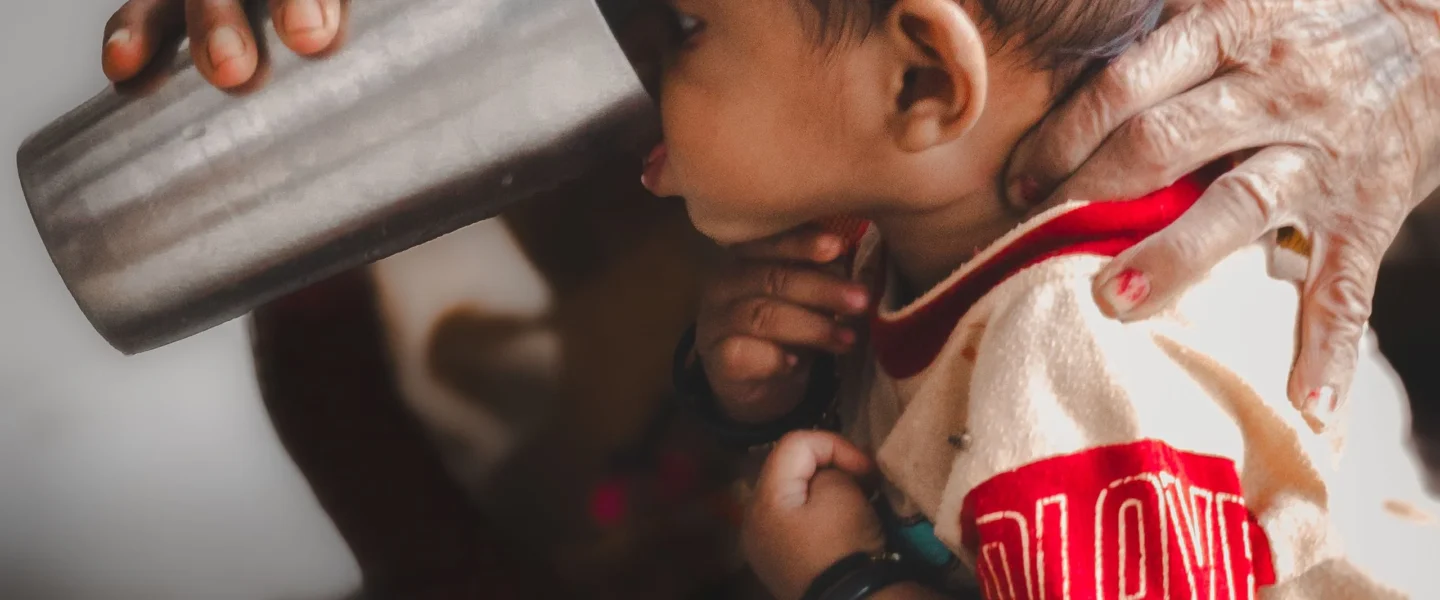
Babies can practice with a cup around six months.
Choosing a first cup
A small open cup teaches the baby to sip from a rim. It is easy to wash but messy at first. A straw cup is another option and can be convenient for outings, although its straw and valves need thorough cleaning. A traditional spouted sippy cup is optional rather than a required stage. Choose a cup with smooth edges and parts that can be taken apart. Practice at meals with a tiny amount of liquid, and let your child explore without pressure.
How to offer the first sips
Choose a relaxed meal rather than a time when your baby is very hungry or tired. Sit the baby upright in a stable high chair with suitable support and straps. Our high-chair guide explains practical safety and fit checks. Add only a little breast milk, correctly prepared formula or age-appropriate drinking water to the cup. Show your child how you sip from your own cup, then gently bring the baby’s cup toward their lips. Wait for interest; do not force the rim into a closed mouth.
Open cup technique
Support a small cup with your hand and tilt it only enough for a tiny amount of liquid to reach the lower lip. Allow your baby to decide whether to close their lips and sip. Never pour a stream of liquid into the mouth. If the baby turns away, coughs repeatedly or seems upset, stop and try again another time. A few safe attempts are better than insisting they finish a serving.
Straw cup technique
Let your baby watch someone sip through a straw, then offer the straw mouthpiece while the child is seated upright. Some babies understand suction quickly, while others need repeated practice. Avoid squeezing a large amount into the mouth. There is no need to buy several training gadgets before trying a simple straw cup. A child who prefers an open cup does not need to learn a straw first.
Keep practice brief and predictable
A minute or two can be enough at first. Put a washable mat under the chair, keep a cloth nearby and praise the effort without making each sip a performance. If your baby tips the cup over or mouths the handle, that is part of exploration. Offer the cup at one predictable meal for a few days, then at additional meals as confidence grows. Notice small improvements rather than measuring every sip.
What should go in a baby’s first cup?
Before six months
Healthy infants younger than six months generally do not need plain water. Breast milk or properly prepared infant formula provides their fluid needs. Do not introduce water merely to practice cup drinking unless a healthcare professional recommends it. Special cup-feeding arrangements for a baby with medical needs are a separate clinical matter.
From about six to twelve months
Breast milk or infant formula remains the main drink and a vital source of nutrition. After solids begin, small sips of plain water with meals are appropriate for many babies. Nationwide Children’s Hospital advises about four to eight ounces, or 120–240 mL, of water per day at ages six to twelve months, rather than replacing milk feeds. Follow individual medical advice if your child has different needs.
After the first birthday
Water and age-appropriate milk can become normal drinks with meals and snacks. Cow’s milk is generally introduced as a drink after twelve months, not as the main drink during infancy. Continued breastfeeding is compatible with cup use. If your child has allergies or special dietary needs, discuss suitable drinks with the pediatrician. Avoid sugary drinks, sweetened tea and flavored milk as incentives for cup practice.
Moving from bottle to cup without a battle
Cup introduction and bottle weaning are related but different. A baby can practice a few sips from a cup for months while still receiving needed milk feeds. The AAP suggests beginning cup practice around six months and gradually reducing bottles, typically completing the transition between twelve and eighteen months. The NHS discourages ongoing bottle feeding after the first birthday.
Begin with an easy daytime bottle, often one taken while your child is alert and seated at a meal. Offer familiar milk in a cup without pressure. Once that feed goes smoothly, try another. A bedtime bottle may be closely tied to comfort; build soothing routines with stories, cuddles or songs while changing the habit. If your child is not eating or drinking enough, seek individualized guidance rather than abruptly removing milk feeds.
What if your baby refuses a cup?
Check that your baby is comfortable and seated securely. A child who pushes the cup away may be tired, not thirsty or unfamiliar with it. Try another mealtime, offer a little familiar milk, demonstrate sipping and let the baby handle an empty cup while supervised. If an open cup is frustrating, a straw cup may feel easier, and the reverse can also be true.
Cup safety and cleaning
Always supervise your baby while drinking and keep them seated upright. Never prop a cup in the mouth. Avoid letting a toddler run with a hard spout or straw in the mouth because falls can cause injury. Keep hot drinks away from the feeding area. Choose cups with smooth edges and parts that come apart for cleaning. Replace cracked plastic, damaged silicone or worn straws that may trap dirt.
Wash cups, lids, straws and valves after use with soap and water or according to the manufacturer’s instructions. Pay attention to hidden channels, and dry all parts completely before storage. The CDC’s feeding-equipment guidance recommends additional sanitizing precautions for very young, premature or immunocompromised infants. Our bottle-cleaning guide explains cleaning versus sanitizing.
Open cup, straw cup or sippy cup: which should you choose?
An open cup has a simple rim, few parts to wash and lets your child practice sipping, but it spills easily. A straw cup can be convenient for travel and gives your child another drinking skill to practice, although lids and valves need careful cleaning. Spouted, spill-proof sippy cups are optional rather than a required developmental stage. The NHS recommends open or free-flow cups without valves, while the American Academy of Pediatrics also recognizes straw cups as a reasonable starting option.
What matters more than the brand?
- Easy cleaning: Choose a design you can take apart and wash thoroughly after every use.
- Comfortable size: A small cup with smooth edges is easier to manage than a large travel tumbler.
- Durability: Check for cracked plastic, worn seals or damaged straw tips and replace unsafe parts.
- Appropriate use: Follow the maker’s age, dishwasher and temperature instructions.
- Everyday practicality: A cup that is easy to clean and refill will probably get used more consistently.
You do not need to buy several expensive training cups. Try a simple open cup at home and consider an easy-clean straw cup if it solves a real problem during outings. If one style frustrates your child, pause and try the other another day.
Signs your baby is ready to practice
Many babies are ready to explore a cup around the time they start solid foods. They should be able to sit upright with appropriate support, hold their head steadily and show interest in mealtime. Offer a cup only when your baby is awake and calm, not while lying down or strapped into a moving stroller. Premature babies and children with feeding or swallowing conditions may need an individualized plan.
Look for curiosity, such as reaching for the cup or watching you drink. A baby who turns away, closes their lips or becomes upset is communicating that they are finished for now. Do not pour liquid into their mouth or treat a refused sip as a failure. Small, low-pressure practice is enough.
A realistic seven-day cup practice plan
Days 1–2: At one relaxed meal, offer one or two tiny assisted sips. Let your baby touch the cup and watch you drink. Stop before either of you becomes frustrated.
Days 3–4: Repeat at the same mealtime. Hold the cup steady but give your baby time to move their lips toward the rim or straw. Continue normal breast milk or formula feeds.
Days 5–6: Let your child help hold the cup while you control the angle. If the first style is consistently frustrating, try the other style at a different meal. Keep a cloth and washable mat nearby.
Day 7: Review what is working. Is your baby comfortable and curious? Have they managed even a small sip? Keep using the easier cup. A week of spills is not a problem; this is an example routine, not a developmental deadline.
Water and milk: an age-by-age reminder
Before six months: Healthy babies usually get their fluids from breast milk or correctly prepared infant formula. Do not introduce plain water just to teach a cup unless your clinician recommends it.
Six to twelve months: Breast milk or formula remains the main drink. The AAP recommends approximately 4–8 ounces (120–240 mL) of plain water per day as babies start solids. That is a general guide, not a requirement to finish a cup at every meal. Use safe drinking water and follow local advice when water quality is uncertain.
After twelve months: Water and age-appropriate milk become everyday drinks. Cow’s milk is generally introduced as a main drink after the first birthday; continued breastfeeding is compatible with cup drinking. Seek advice for allergies, growth concerns or medically restricted diets.
Do not use sweetened tea, juice or flavored drinks to persuade a baby to drink. Frequent sipping of sugary drinks increases exposure of developing teeth to sugar. If a baby is unwell, dehydrated or struggling to feed, seek medical guidance instead of improvising with extra plain water.
Gradual bottle weaning: five useful steps
- Start with one daytime feed. Choose a bottle that is not closely tied to falling asleep.
- Use a familiar drink. Offer expressed breast milk or formula in the cup if appropriate; a familiar taste can make the new method less surprising.
- Change one routine at a time. Keep other feeds stable while your child adjusts. Do not abruptly reduce needed nutrition.
- Replace comfort, not connection. For a bedtime bottle, add stories, cuddles and a predictable wind-down routine. Offer milk before toothbrushing rather than leaving a bottle in bed.
- Watch overall intake. If your child drinks too little, loses weight or has fewer wet diapers than usual, consult their pediatrician rather than pushing ahead with weaning.
Many families begin cup practice around six months and complete the bottle transition during the second year. The AAP describes a gradual transition usually finished between twelve and eighteen months; NHS guidance encourages moving away from bottles after twelve months. These recommendations should not override an individualized feeding plan.