Tummy time for newborns can usually begin within the first few days after birth, once your baby is home, awake, and being watched closely. It does not need to be a long workout. A few short sessions each day are enough to start, and you can gradually add time as your baby becomes stronger and more comfortable.
Tummy time means placing a baby on their stomach only while awake and supervised. It helps strengthen the neck, shoulders, arms, and trunk, supports early motor development, and can reduce prolonged pressure on the back of the head. It is completely different from sleep positioning: babies should still be placed on their backs for every nap and nighttime sleep.
When should a newborn start tummy time?
Most healthy babies can start tummy time a day or two after birth. The NIH Safe to Sleep campaign recommends beginning with two or three short sessions of about 3 to 5 minutes each day. If your baby was born prematurely, has a medical condition, is recovering from a procedure, or your healthcare professional has given specific positioning instructions, ask when and how to begin.
There is no need to wait until your baby can hold their head up. Building that head and neck control is one of the reasons tummy time is useful in the first place.
How much tummy time does a newborn need?
Start small and build gradually. For a newborn, several minutes at a time may be plenty. NIH guidance suggests two or three 3-to-5-minute sessions per day at first. By about 2 months, pediatricians recommend working toward roughly 15 to 30 minutes of total tummy time across the day.
That total does not have to happen in one session. Five comfortable minutes repeated several times can be more realistic than trying to keep a frustrated baby on the floor for half an hour.
What is the safest way to do tummy time?
Choose a time when your baby is awake, alert, and not overly hungry or tired. Place them tummy-down on a firm, clear surface on the floor and stay close enough to watch and respond the entire time. A clean play mat or blanket on a clear floor area works well.
Keep pillows, loose bedding, cords, pets, and small objects away from the practice area. Tummy time should never happen unattended, and it should stop if the caregiver is becoming sleepy or cannot continue watching closely.
Floor tummy time
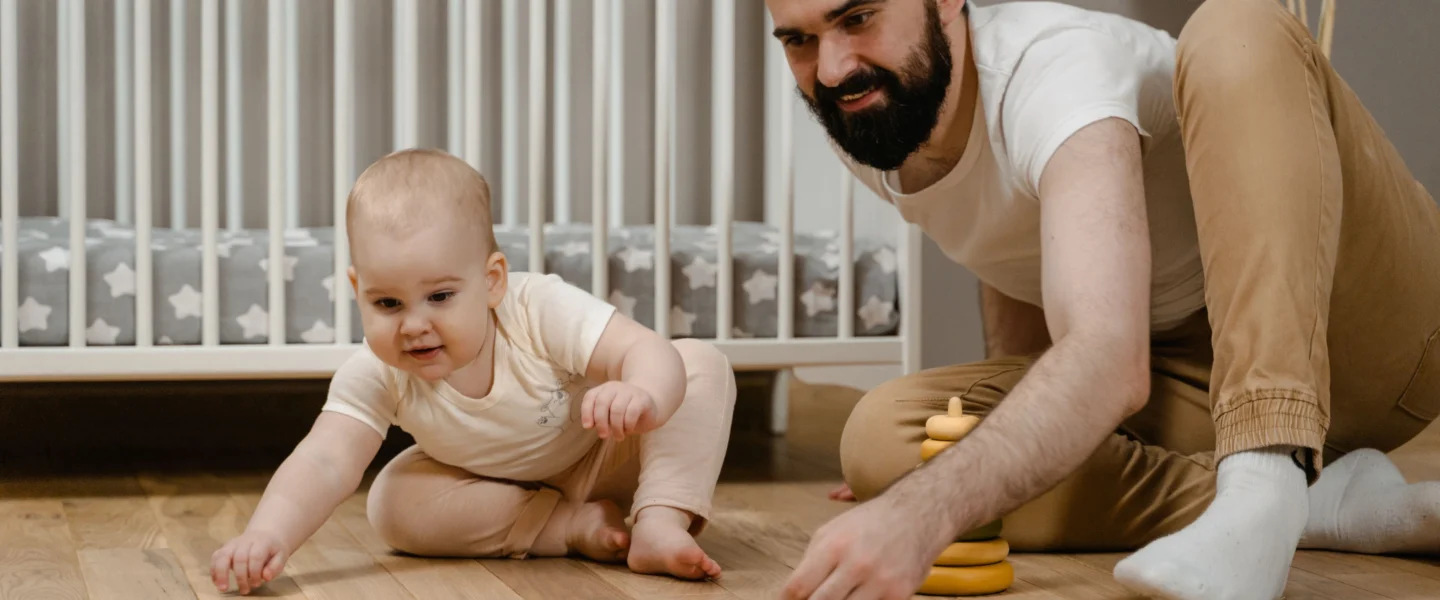
Place your baby on their stomach with their arms positioned comfortably near the shoulders. Get down at eye level, talk, smile, or place a simple toy where your baby can see it. Your face is often more interesting than any toy.
Tummy time on your chest
For a newborn who dislikes the floor, recline while fully awake and place your baby tummy-down on your chest. Support them securely and keep their face and airway visible. This can make the position feel more familiar while still encouraging head lifting and turning.
Using a rolled towel for support
The NIH suggests that a small rolled towel can be placed under a baby’s arms to provide a little support during supervised tummy time. Keep the setup simple and remain beside your baby. The towel is a supervised play aid, not a sleep positioner and never belongs in the crib or bassinet.
What if my baby hates tummy time?
Disliking tummy time at first is common and does not mean you are doing it wrong. The position is hard work for a young baby. Instead of pushing through a long crying session, try shorter, more frequent attempts.
Useful approaches include trying after a diaper change or nap, getting face-to-face on the floor, singing or talking, changing the location, or using chest-to-chest tummy time. If your baby becomes very upset, pick them up, settle them, and try again later. Consistency matters more than forcing a specific number of minutes in one sitting.
Can you do tummy time after feeding?
It is usually more comfortable to avoid placing a baby flat on their stomach immediately after a full feed, particularly if they tend to spit up. Give your baby time to settle and choose a period when they are comfortable and alert. There is no universal waiting time that fits every baby, so follow your baby’s cues and any advice from their clinician.
If feeding discomfort is the issue, our guide on how to burp a baby explains gentle positions and when a burping break may help.
Does tummy time help prevent a flat head?
Supervised tummy time can help reduce the amount of awake time a baby spends with pressure on the back of the head. The NIH lists prevention of flat spots as one of its benefits. It also recommends holding babies upright when they are awake and limiting unnecessary time in equipment where the head rests against a surface.
A persistent or worsening flat area, a strong preference for looking only one direction, or difficulty turning the head deserves a conversation with your pediatrician. Tummy time is helpful, but it is not a substitute for evaluating a possible neck or head-shape problem.
Is tummy time safe before the umbilical cord falls off?
Many healthy newborns can begin tummy time before the cord stump falls off, but comfort matters. If floor positioning seems to rub or irritate the area, chest-to-chest positioning may be easier until the stump separates and the skin heals. Follow your baby’s discharge instructions, especially if there were complications or a clinician has advised special cord care.
Can a baby sleep during tummy time?
No. Tummy time is for awake, supervised play only. If your baby becomes sleepy, move them to their normal safe sleep space and place them on their back. NIH Safe to Sleep guidance recommends back sleeping for naps and at night through the first year.
This distinction is important because “tummy to play” does not change safe-sleep recommendations. Our baby sleep guide covers sleep positioning and safer sleep routines in more detail.
What should tummy time look like as a baby grows?
Early tummy time may look like tiny head turns and brief attempts to lift the face. Over time, babies typically become better at lifting the head and chest, bearing weight through their forearms, reaching, and pushing up. The CDC lists pushing up with straight arms while on the tummy as a movement milestone by 6 months for most babies.
Milestones are useful guides, not deadlines for comparing babies. If your baby loses a skill they previously had, seems unusually floppy or stiff, consistently uses one side differently, or you are concerned about development, talk with your child’s healthcare professional rather than waiting for the next routine visit. The CDC recommends acting early when parents have developmental concerns.
Do you need special tummy-time toys or mats?
No special product is required. A safe, clear floor area and an attentive caregiver are enough. A simple washable mat can make cleanup easier, and an age-appropriate toy or mirror may encourage looking and reaching, but the equipment is optional.
For parents deciding what is genuinely useful at each stage, our baby gear by age guide separates practical essentials from items you may not need.
Can tummy time replace time in a baby carrier?
No. Carrying a baby upright and supervised tummy time serve different purposes. Holding and babywearing can reduce time spent with the back of the head against a surface, while floor tummy time gives babies a chance to work against gravity and practice different movements.
If you use a carrier, positioning and airway safety matter. See our guide to using baby carriers with newborns for practical fit and safety guidance.
When should you ask a pediatrician about tummy time?
Ask for individualized guidance if your baby was born prematurely, has significant reflux or another medical condition, has had surgery, or has been given special positioning instructions. You should also raise concerns if your baby consistently cannot turn the head both ways, strongly favors one side, develops a noticeable flat spot, appears to be in pain during positioning, loses a skill, or you are worried about their movement or development.
Parents notice their babies every day. You do not need to diagnose the cause before asking a clinician to take a look.
Quick tummy time checklist
- Start in the first days after birth for most healthy babies.
- Only practice while your baby is awake and directly supervised.
- Begin with short 3-to-5-minute sessions two or three times a day.
- Gradually work toward about 15 to 30 total minutes daily by around 2 months.
- Use a firm, clear floor area or supervised chest-to-chest position.
- Try after a nap or diaper change when your baby is calm and alert.
- Stop and reset if your baby becomes very distressed or sleepy.
- Always place your baby on their back for sleep.
Bottom line
Tummy time for newborns should be short, supervised, and repeated often enough to become part of the day. Start with a few minutes, build gradually, and use positions your baby tolerates. The goal is not to hit a perfect daily score; it is to give your awake baby regular opportunities to strengthen the muscles and movement skills that develop over the first months.
Sources: NIH Safe to Sleep — Tummy Time for a Healthy Baby; NIH Safe to Sleep — Ways to Reduce Baby’s Risk; CDC — Milestones by 6 Months; CDC — Developmental Milestones.
This article provides general educational information and is not a substitute for advice from your child’s healthcare professional.