Your Weaning Roadmap
- Signs of Readiness: Is Your Baby Ready?
- BLW vs. Traditional Mashes: Which is Better?
- First Foods: From Khichdi to Avocado
- Safety First: Choking vs. Gagging
- Introducing Allergens in the Pakistani Diet
- Essential Weaning Gear for Busy Mamas
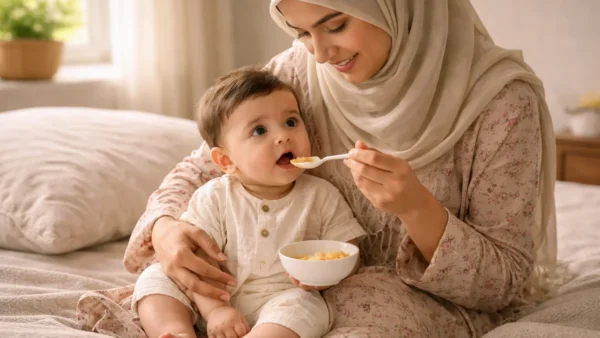
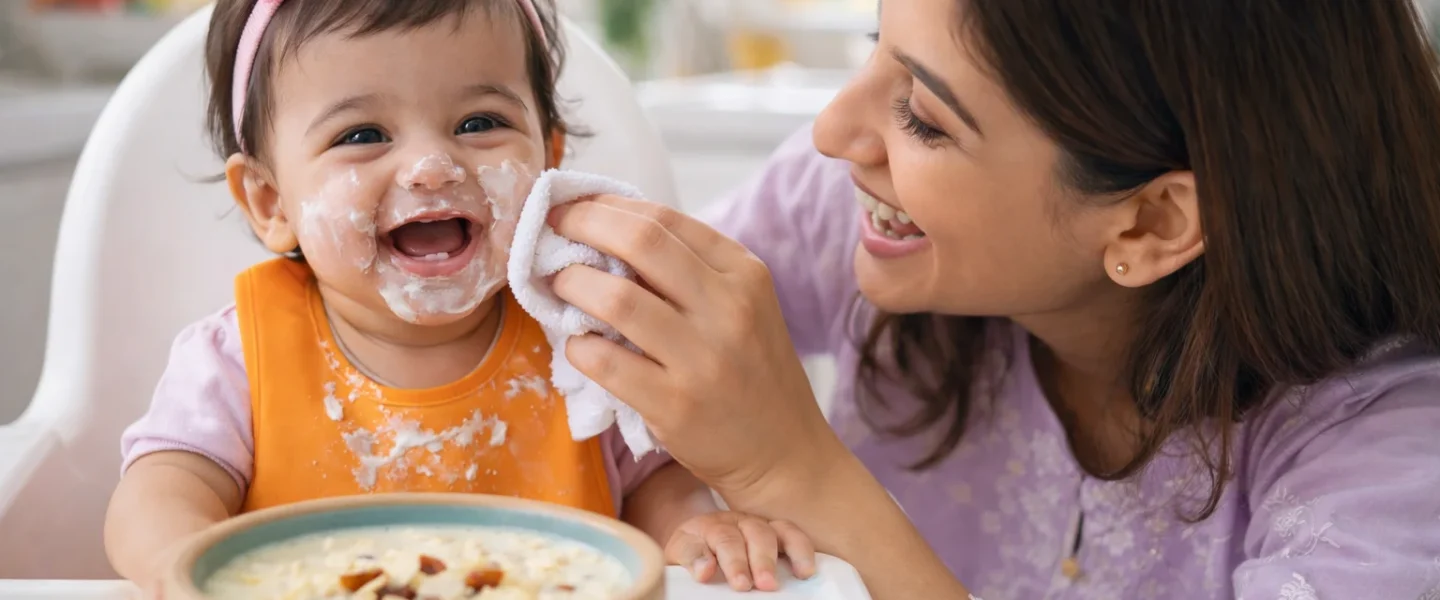
Starting solids is one of the most exciting, yet nerve-wracking, milestones in your baby’s first year. In Pakistan, the “Ghutti” ceremony or “Annaprashan” marks the beginning, but the actual day-to-day process of starting solids requires a balance of cultural tradition and modern pediatric safety. Whether you are leaning towards Baby-Led Weaning (BLW) or the traditional nani-approved mashes, this guide will walk you through the transition from milk to meals.
When starting solids, many Pakistani mamas face pressure to start as early as 4 months. However, global health authorities like the WHO and the NHS strongly recommend waiting until 6 months. This ensures your baby’s digestive system and kidneys are mature enough to handle complex nutrients. Let’s dive into the 12 essential steps for successfully starting solids in a Desi household.
Step 1: Recognizing the Signs of Readiness
Before starting solids, your baby must show physical signs that they are ready to move beyond breastmilk or formula. Look for:
- Good Head Control: They can hold their head steady while sitting.
- Sitting Up: They can sit with little to no support.
- Loss of Tongue Thrust: They no longer push food out of their mouth automatically.
- Curiosity: They watch you eat and reach for your plate during family dinners.
If your baby isn’t hitting these marks, wait a week or two before starting solids again.
Step 2: BLW vs. Traditional Mashes
There is a growing debate in Pakistan about starting solids via Baby-Led Weaning (BLW) versus traditional purees.
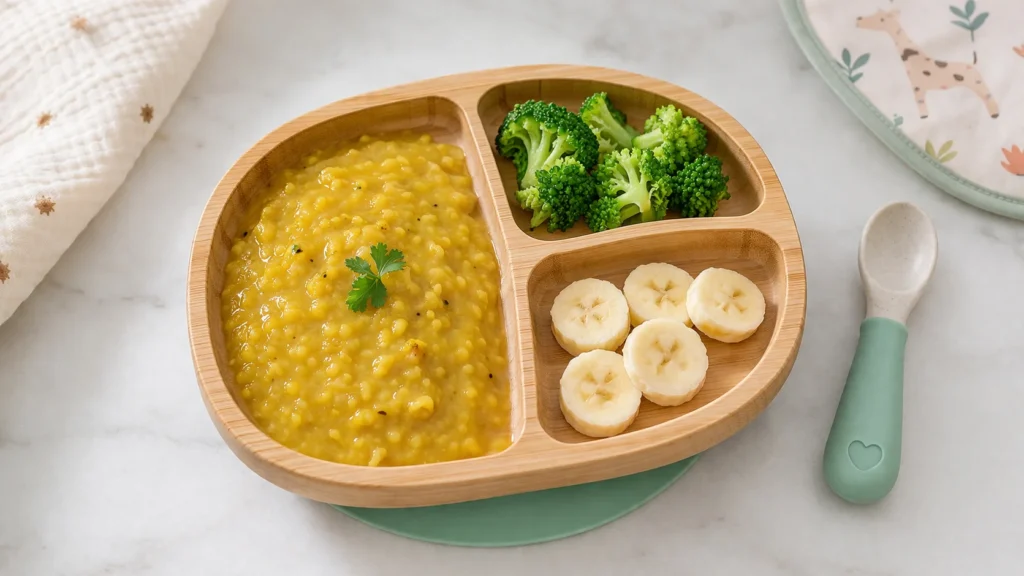
- Traditional Mashes: Think soft-boiled daal, mashed banana, or suji ki kheer. It’s easier for mamas to track intake, but can lead to “picky eating” later if textures aren’t advanced quickly.
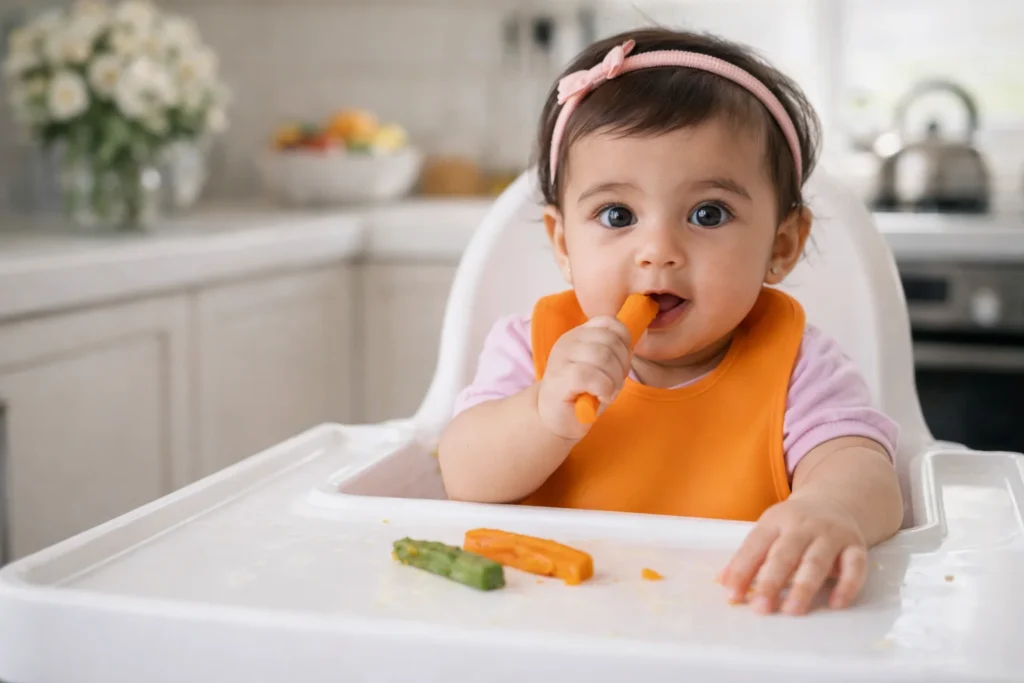
- Baby-Led Weaning (BLW): This involves giving baby soft-cooked finger foods (like a steamed carrot stick). It encourages independence and fine motor skills.
Many Pakistani mamas find a “hybrid” approach works best for starting solids offering a mash for nutrition and a finger food for exploration.
Step 3: Choosing the Best First Foods
When starting solids in Pakistan, we are blessed with incredible seasonal produce.
- Iron-Rich Foods: Essential because baby’s natural iron stores deplete by 6 months. Try pureed chicken, egg yolks, or well-cooked masoor daal.
- Vegetables: Steamed kaddu (pumpkin), carrots, or peas are gentle on the stomach.
- Fruits: Mashed banana, papaya, or soft-peeled pear. Avoid adding salt or sugar to any food when starting solids.
Step 4: Understanding Choking vs. Gagging
The biggest fear when starting solids is choking. However, gagging is a normal, safe part of learning to eat. Gagging is loud (coughing/sputtering) and moves food forward. Choking is silent and dangerous. Ensure you always supervise your baby and avoid high-risk foods like whole grapes, nuts, or hard pieces of apple when starting solids.
Step 5: Introducing Common Allergens
Modern science suggests that starting solids with common allergens (like eggs, peanuts, or dairy) early can actually prevent future allergies. In Pakistan, introduce a tiny bit of well-cooked egg or thinned peanut butter and wait 3 days to check for a reaction (hives, vomiting, or breathing issues). For expert skin reaction guidance, consult a pediatrician via Instacare.
Step 6: Essential Weaning Gear
To make starting solids less messy, you’ll need the right tools.
- High Chair: For a safe, upright position.
- Silicone Bibs: To catch the inevitable daal spills.
- Short, Chunky Spoons: Perfect for little hands to practice.
Check out our reviews for the best baby products in Pakistan to find weaning kits that suit your budget.
Mama, starting solids is a marathon, not a sprint. Some days they will eat everything, and some days they will just throw it at the wall. Both are normal! Focus on the joy of discovery rather than the amount they swallow. For more tips on growth, see our baby milestone guide.
What was your baby’s very first food? Tell us in the comments!

Written by
Javeria
A passionate contributor to Coo Coo Babys, dedicated to supporting Pakistani mamas through every stage of motherhood.