
Your Healing Roadmap
- The “Sawa Mahina”: Tradition vs. Science
- Physical Healing: C-Section and Normal Delivery Care
- Postpartum Depression: Breaking the Silence in Pakistan
- Postpartum Nutrition: The Truth About Panjiri and Ghee
- Pelvic Floor Health: The Forgotten Recovery Step
Postpartum recovery in Pakistan is often shrouded in a mix of beautiful traditions and outdated myths. The moment the baby arrives, the focus shifts entirely to the newborn, leaving the mother—who has just undergone a major medical event—to fend for herself. Whether you are dealing with the stitches of a C-section or the exhaustion of a normal delivery, your postpartum recovery in Pakistan requires intentionality, rest, and the right information.
In our culture, the first 40 days (the Chilla or Sawa Mahina) are meant for rest, but they are often filled with high-stress visits from relatives and unsolicited advice. This postpartum recovery in Pakistan guide is designed to help you navigate this “Fourth Trimester” using evidence-based medical advice from global leaders like the ACOG and the World Health Organization, while honoring the local support systems that actually work.
The “Sawa Mahina”: Tradition vs. Science
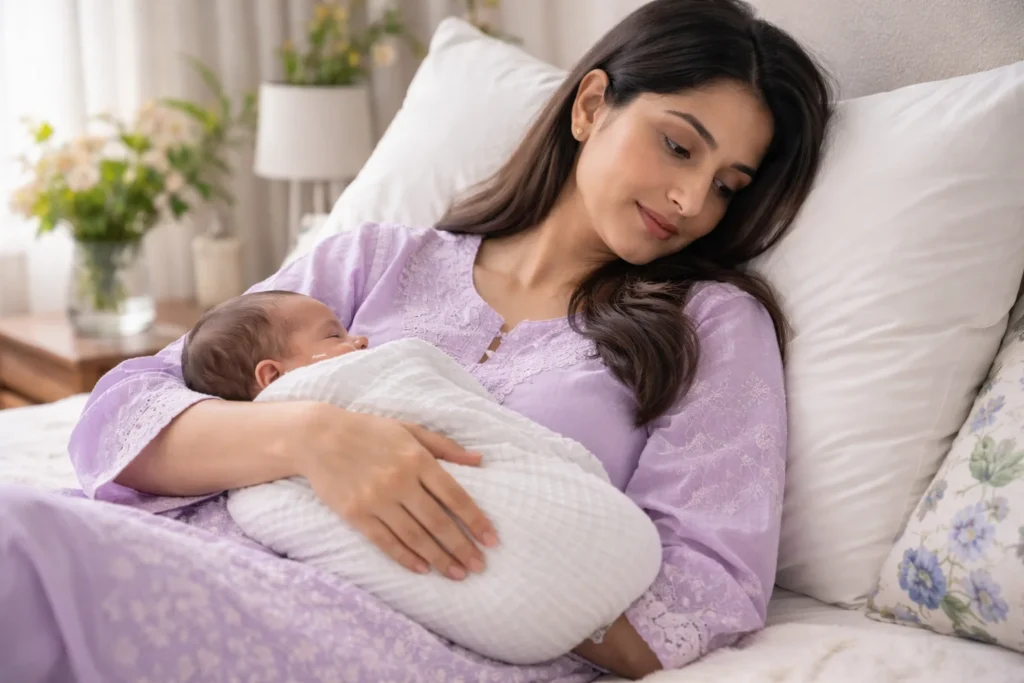
The 40-day confinement period is a staple of postpartum recovery in Pakistan. While some view it as restrictive, science actually supports the need for a “lying-in” period. Your uterus takes about six weeks to return to its pre-pregnancy size (a process called involution). During these initial weeks of postpartum recovery in Pakistan, avoiding heavy lifting and excessive stairs is vital, especially if you’ve had a cesarean birth.
Physical Healing: Stitches, Bleeding, and Care
Physical healing is the most immediate hurdle in postpartum recovery in Pakistan. Postpartum bleeding (lochia) can last up to six weeks. It is crucial to use high-quality, breathable pads and maintain strict hygiene to avoid infections—a common complication in our humid climate.
C-Section Recovery in the Pakistani Heat
If you’ve had a C-section, your postpartum recovery in Pakistan involves caring for a major surgical incision. Keep the area dry and clean. Avoid the traditional “garam patti” (hot bandage) if it causes sweating around the wound, as this can lead to fungal infections. For high-quality wound care advice, the NHS provides excellent guidelines on spotting early signs of infection.
Postpartum Depression: Breaking the Silence
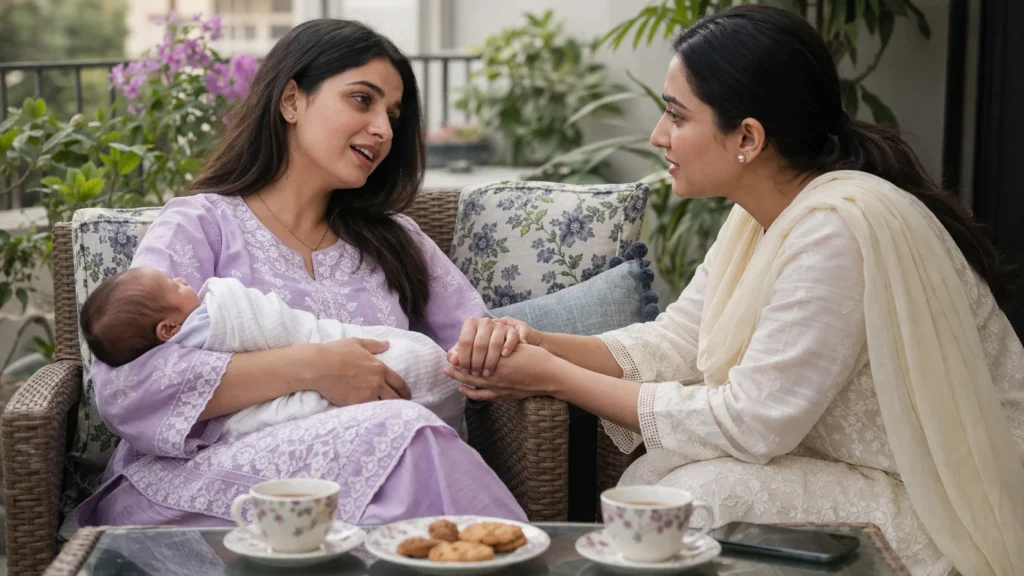
Perhaps the most neglected part of postpartum recovery in Pakistan is mental health. The “Baby Blues” are normal, but if feelings of sadness, anger, or detachment from the baby last longer than two weeks, it may be Postpartum Depression (PPD). In many Pakistani households, PPD is dismissed as “weakness of faith” or laziness. This is dangerous. Postpartum recovery in Pakistan must include emotional support. If you are struggling, reach out to professional counseling services or maternal support groups at Aga Khan University Hospital.
Postpartum Nutrition: The Truth About Panjiri
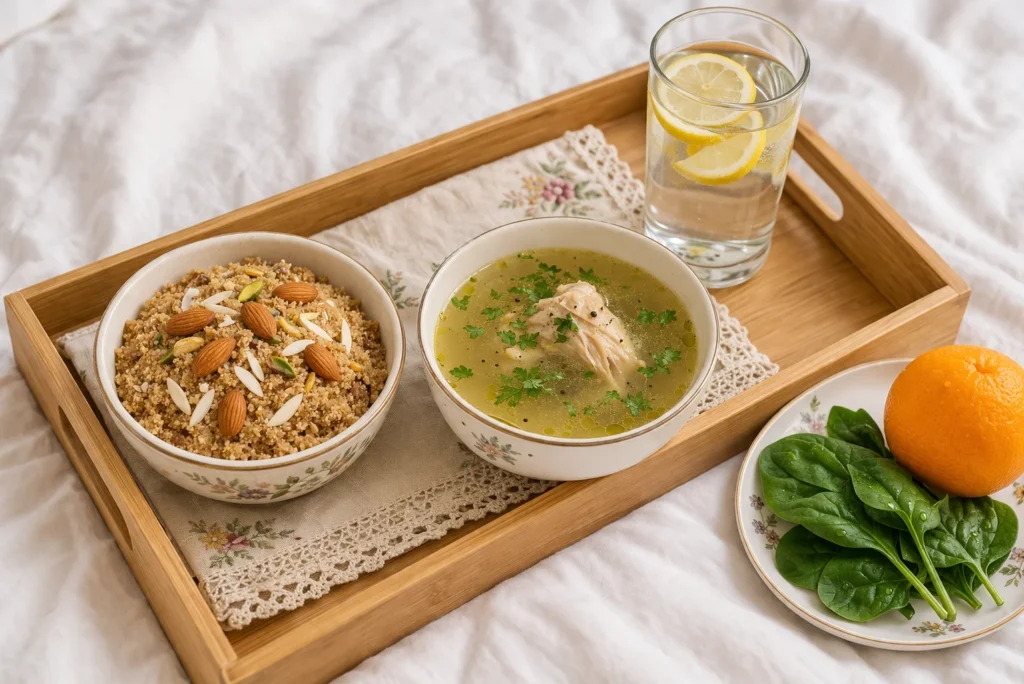
Nutrition is the backbone of postpartum recovery in Pakistan. Traditional foods like Panjiri (made of semolina, nuts, and gond) are excellent for energy and lactation, but they shouldn’t be your *only* food. You need a balanced diet of fiber-rich vegetables to avoid postpartum constipation—a nightmare for anyone with stitches. Combine your traditional Yakhni (bone broth) with fresh salads and plenty of water.
Pelvic Floor Health: The Forgotten Step
Don’t let “leaking” when you sneeze become your new normal. A major part of postpartum recovery in Pakistan is rehabilitating your pelvic floor. Once your doctor clears you (usually at the 6-week checkup), begin gentle Kegel exercises. Strengthening these muscles is essential for long-term health and prevents complications like prolapse later in life.
Mama, your postpartum recovery in Pakistan is not a race. It took nine months to grow a human; give yourself more than 40 days to feel “normal” again. If you’re looking for the right gear to help you through this stage, check out our reviews of the best baby products in Pakistan. You’ve got this!
How was your “Sawa Mahina”? Share your recovery tips in the comments below!

Written by
Humaira
A passionate contributor to Coo Coo Babys, dedicated to supporting Pakistani mamas through every stage of motherhood.