
In This Article
- Navigating Your Baby Milestone Guide
- Months 1-3: Cognitive Awakenings
- Months 4-6: Mobility and Solids
- Months 7-9: Communication and Exploration
- Months 10-12: The Transition to Toddlerhood
- Development in the Pakistani Environment
- Monitoring Developmental Red Flags
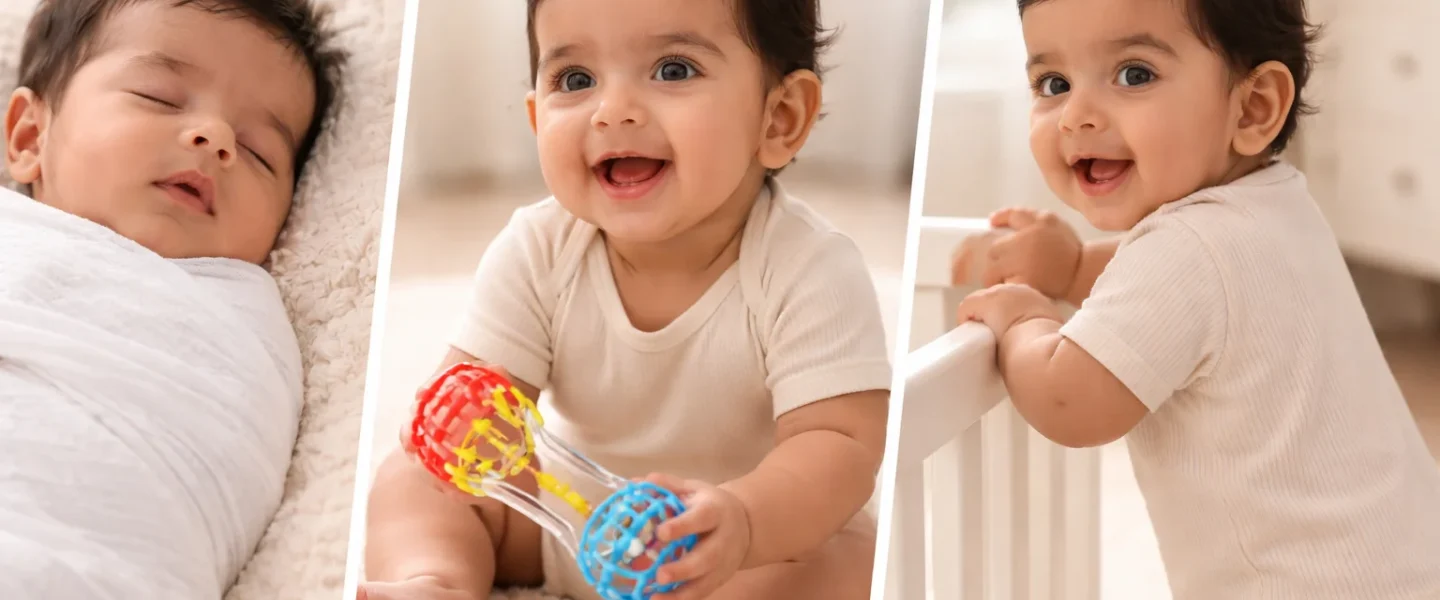
Baby milestone guide: tracking your little one’s growth is perhaps the most exciting part of early parenthood. From the moment you bring your newborn home to the chaotic joy of their first birthday, your child undergoes a biological transformation unlike any other phase of life. This baby milestone guide is designed to help Pakistani mamas navigate these changes with confidence, separating traditional myths from modern pediatric science.
Understanding infant development stages is not about checking boxes on a rigid schedule; it is about observing the unique personality and physical capabilities of your child as they unfold. In Pakistan, we often hear “mashwaray” from elders comparing one cousin to another. However, a professional baby milestone guide reminds us that “normal” is a wide range. Whether your baby crawls at six months or ten, they are on their own beautiful path.
Months 1-3: Cognitive Awakenings and The Fourth Trimester
The first three months are often called the “Fourth Trimester.” Your baby is transitioning from the dark, rhythmic environment of the womb to the bright, loud world of a Pakistani household. During this phase, our baby milestone guide focuses on sensory development and basic motor skills.
The Social Smile
Around 6 to 8 weeks, you will witness the “Social Smile.” Unlike the reflexive smiles seen during sleep, this is a response to your voice or face. It is a major emotional checkpoint in any baby milestone guide. This is the first time your baby communicates joy, and it strengthens the maternal bond significantly.
Tummy Time and Neck Strength
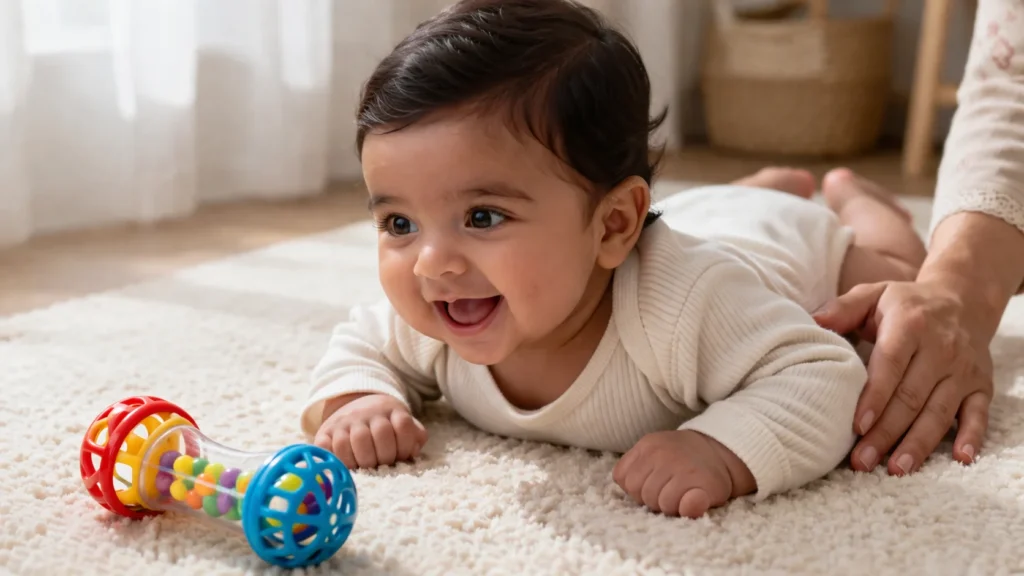
In our baby milestone guide, we cannot overstate the importance of tummy time. With the prevalence of marble and tile flooring in Pakistan, ensure you have a thick, clean “malmal” cloth or a padded playmat. Placing your baby on their stomach for 2-5 minutes several times a day helps prevent flat head syndrome and builds the neck muscles required for sitting later on.
Months 4-6: Rolling, Babbles, and the Weaning Journey
By the second quarter, your baby’s personality truly begins to shine. They are no longer just “sleepy newborns.” This section of the baby milestone guide highlights the shift from passive observation to active engagement.
Physical Dexterity: Rolling and Reaching
Most babies learn to roll from front to back first. If your baby is four months old and still prefers lying still, don’t panic. Use toys to encourage reaching across their midline. This baby milestone guide suggests using colorful, high-contrast toys to stimulate their vision, which is now almost fully developed in terms of color perception.
The Start of Solids (The 6-Month Mark)
In Pakistan, the six-month mark is often celebrated with a “Ghutti” or a formal solid food ceremony. While tradition is beautiful, our baby milestone guide follows the WHO recommendation of exclusive breastfeeding for the first six months. When you do start solids, focus on iron-rich mashes like daal or soft-boiled egg yolks. For reviews on the best high-chairs and spoons available locally, see our best baby products in Pakistan review.
Months 7-9: Communication, Teething, and Exploration
This is arguably the most demanding phase for parents. Your baby is likely sitting up and may even be “army crawling” (dragging themselves by their arms). This baby milestone guide focuses on how to keep them safe during this exploration phase.
Teething and Sensory Play
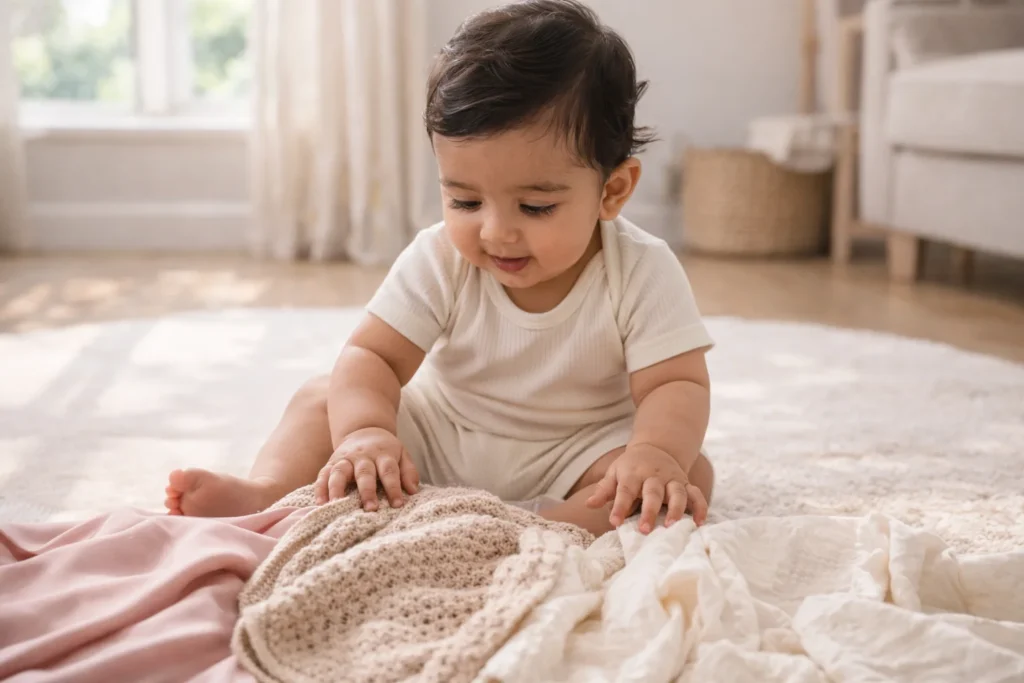
Teething usually begins now, often accompanied by drooling and irritability. Many Pakistani mamas use wooden teethers or chilled carrots (under supervision). Sensory play is another pillar of the baby milestone guide for this age. Letting your baby touch different textures—like raw rice, soft silk, or smooth stones—helps develop neural pathways in the brain.
Months 10-12: The Transition to Toddlerhood
As you approach the one-year mark, the baby milestone guide shifts toward fine motor skills and early language. Your baby is likely “cruising”—walking while holding onto the sofa or the edge of the bed.
First Words and Intentional Gestures
You might hear ‘Amma’ or ‘Baba’ with actual meaning. They will start pointing at things they want. This baby milestone guide encourages you to narrate your day to them. Tell them about the “chidiya” (bird) outside or the “paani” (water) they are drinking. Language immersion is the best way to hit these speech milestones.

Development in the Pakistani Environment
Our environment plays a huge role in how we apply a baby milestone guide. For instance, the extreme heat in Sindh and Punjab means babies might be more lethargic during peak summer afternoons. Conversely, the dry winters in the North might affect a baby’s sleep and respiratory health. Adjust your expectations within the baby milestone guide based on the season.
Monitoring Developmental Red Flags
A responsible baby milestone guide must include when to seek professional help. If your baby is not sitting by 9 months or walking by 18 months, it is time for a check-up. We always recommend consulting with specialists at Dr. Khilji Faisal or checking Instacare for the best pediatricians in your city.
Using a baby milestone guide is about empowerment, not anxiety. Celebrate every “coo,” every “crawl,” and every “clap.” You are doing an amazing job raising the next generation! If you found this baby milestone guide helpful, please share it with your fellow mamas.

Written by
Javeria
A passionate contributor to Coo Coo Babys, dedicated to supporting Pakistani mamas through every stage of motherhood.