

Your Nursing Roadmap
- The Foundation: Master the Latch
- The 24-Hour Breastfeeding Routine (0-6 Months)
- Nursing in a Joint Family: Privacy and Support
- Desi Lactation Recipes: Panjiri and Doodh-Jalebi
- Common Challenges: Clogged Ducts and Supply Issues
Breastfeeding routine: it is a phrase that sounds simple but requires immense patience, especially in the first six weeks. In Pakistan, we are often told that breastfeeding should “just happen,” but the reality is that it is a learned skill for both mama and baby. Establishing a consistent breastfeeding routine is the key to ensuring your baby grows healthy while you maintain your own physical and mental well-being.
Whether you are a stay-at-home mama or preparing to return to work, your breastfeeding routine will be the anchor of your day. Following global standards from the WHO and UNICEF Pakistan, this guide blends medical evidence with the practical realities of a Pakistani household.
Step 1: The Foundation—Mastering the Latch
Before you can settle into a breastfeeding routine, you must ensure the baby is latching correctly. A poor latch is the #1 cause of cracked nipples and low supply. Your baby’s mouth should cover a large portion of the areola, not just the nipple. If it hurts, it’s usually a sign to unlatch and try again.
The 24-Hour Breastfeeding Routine
In the early days, a breastfeeding routine is “on demand.” However, by week 6, most babies fall into a predictable rhythm. Here is what a typical day looks like:
| Time | Activity | Mama Tip |
|---|---|---|
| 6:00 AM | The Morning Feed | Hydrate with a large glass of water immediately after. |
| 9:00 AM | The Mid-Morning Boost | Eat your lactation-friendly nashta (breakfast). |
| 12:00 PM | The Lunchtime Nursing | Use a nursing pillow to save your back. |
| 3:00 PM | The Afternoon Cluster | Expect shorter, more frequent feeds during “cluster” hours. |
| 7:00 PM | The Bedtime Feed | Dimmest lights possible to signal sleep. |
Nursing in a Joint Family: Finding Your Space
Maintaining a breastfeeding routine in a joint family requires clear boundaries. With guests dropping in unannounced, many mamas feel pressured to stop nursing or hide away.
- The Nursing Apron: Invest in a breathable cotton cover for privacy in common rooms.
- The “Feeding Room”: Dedicate a corner of your bedroom with a comfortable chair, water, and snacks.
- Communication: Ask your husband to manage visitors so your breastfeeding routine isn’t interrupted.
Desi Lactation Recipes for Supply
Your breastfeeding routine is fueled by what you eat. In Pakistan, we have ancient recipes known for boosting supply (galactagogues).
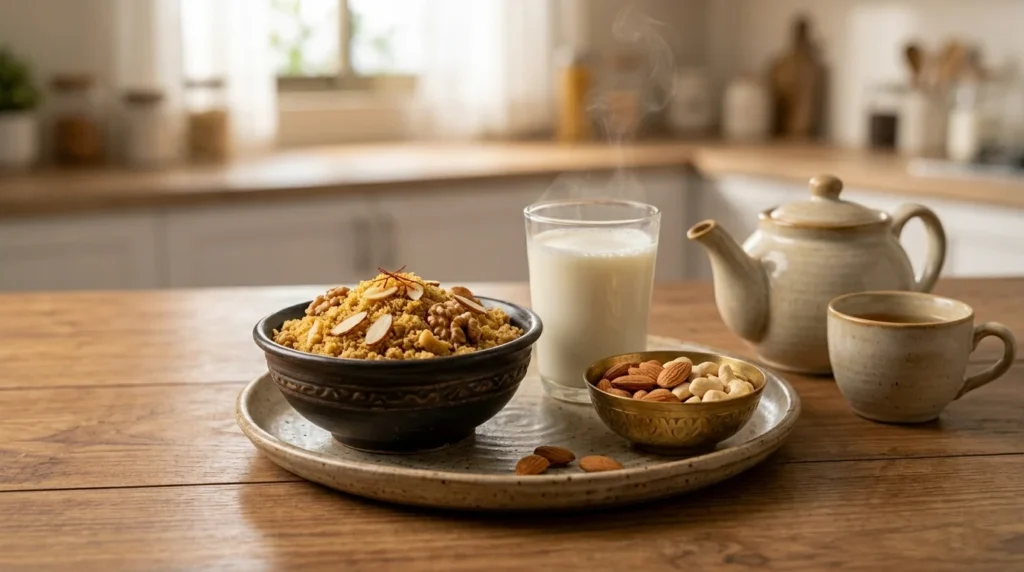
1. Traditional Postpartum Panjiri
Panjiri is the gold standard of postpartum recovery in Pakistan. It’s packed with healthy fats and nuts.
Ingredients: Semolina (Suji), Desi Ghee, Phool Makhana, Gum Arabic (Gond), and crushed Almonds/Walnuts.
Method: Roast the ingredients in ghee until golden. Eat two tablespoons with warm milk every morning.
2. Zeera and Sowa Water (Cumin & Fennel)
This is a secret for many mamas to boost milk and reduce baby colic.
Method: Boil 1 teaspoon of Zeera and 1 teaspoon of Saunf in 2 cups of water. Strain and sip throughout the day as part of your breastfeeding routine.

Common Challenges and Solutions
Even with a solid breastfeeding routine, you might face hurdles:
- Engorgement: If your breasts feel hard and painful, use warm compresses before feeding.
- Clogged Ducts: Gently massage the lump while nursing or pumping.
- Low Supply: The best way to increase supply is “demand and supply” the more you nurse, the more milk your body makes.
Mama, your breastfeeding routine is a labor of love. Whether you nurse for six months or two years, you are giving your baby the best start in life. For products that make nursing easier, like high-quality pumps and pillows, see our reviews of the best baby products in Pakistan.
If you’re tracking your baby’s growth alongside nursing, don’t forget to check our baby milestone guide.

Written by
Humaira
A passionate contributor to Coo Coo Babys, dedicated to supporting Pakistani mamas through every stage of motherhood.