
Baby Vaccination Schedule: The Complete Month-by-Month Pakistan Guide
In This Guide
- Understanding the Pakistan EPI Schedule
- At Birth: The First Shield
- Weeks 6, 10, and 14: The Triple Defense
- Months 9 and 15: Measles and Beyond
- Private vs. Government: What’s the Difference?
- Managing Fever and Post-Vaccination Care
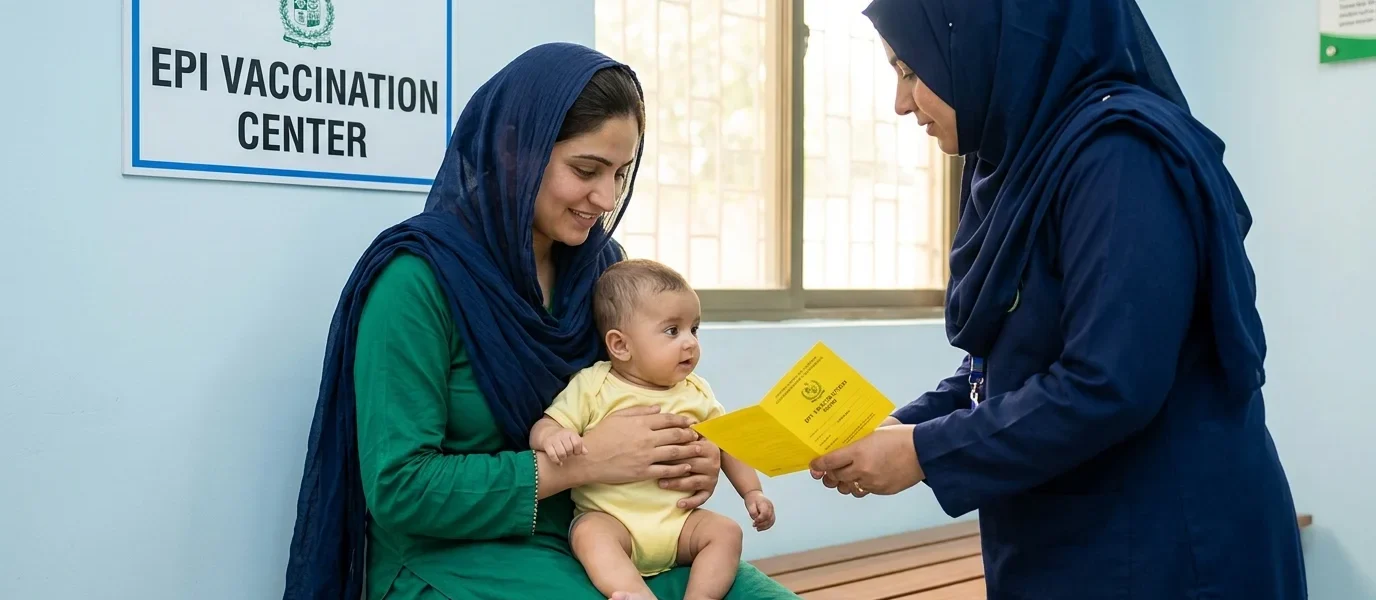
Baby vaccination schedule: it is the most important document you will hold in your hand after your baby’s birth certificate. In Pakistan, the government’s Expanded Programme on Immunization (EPI) provides free, life-saving vaccines against 12 deadly diseases. However, understanding the baby vaccination schedule on your hospital card can feel like reading a foreign language. This guide simplifies every jab, every drop, and every milestone to ensure your child is fully protected.
Whether you are visiting a specialized government center like the National Institute of Health (NIH) or a private consultant, following a baby vaccination schedule is not just a choice it’s a responsibility. With polio still a concern in our region, staying updated with your baby vaccination schedule is your contribution to a healthier Pakistan.
At Birth: The First Shield
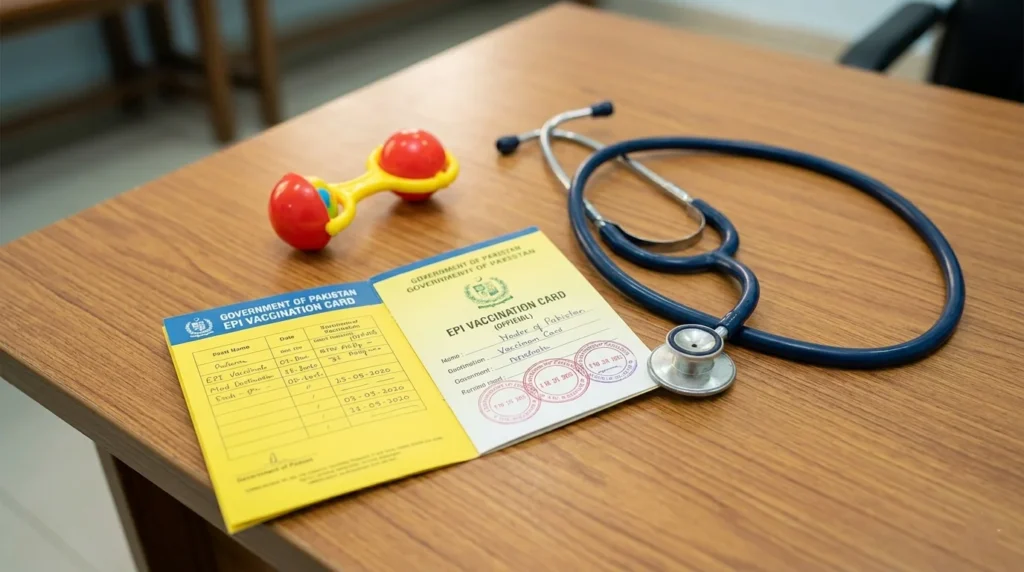
Your baby vaccination schedule begins within the first 24 hours of life. Usually, before you even leave the hospital, the nurses will administer three critical items:
- BCG: Protects against Tuberculosis (TB). It often leaves a small scar on the upper arm this is normal!
- OPV-0: The first dose of Oral Polio Vaccine drops.
- Hepatitis B: Protects the liver from birth-acquired infections.
Weeks 6, 10, and 14: The Triple Defense
The most intense part of the baby vaccination schedule happens in the first three months. The EPI card follows a 6-10-14 week rhythm.
The Pentavalent Vaccine
This is a “5-in-1” jab included in the baby vaccination schedule. It protects against Diphtheria, Tetanus, Pertussis (Whooping Cough), Hepatitis B, and Hib (Meningitis/Pneumonia). Because it covers so much, it is common for babies to develop a mild fever after this visit.
Rotavirus and PCV
The baby vaccination schedule also includes Oral Rotavirus drops (for diarrhea) and the Pneumococcal (PCV) jab (for pneumonia). In Pakistan, pneumonia is a leading cause of infant mortality, making these specific visits at 6, 10, and 14 weeks absolutely vital.
Months 9 and 15: Measles and Beyond
Once you pass the 14-week mark, you get a small break. The next stage of the baby vaccination schedule occurs at 9 months and again at 15 months for the Measles and Rubella (MR) vaccine. Measles outbreaks are still common in parts of Sindh and Punjab, so completing the second dose at 15 months is essential for long-term immunity.
Private vs. Government: What’s the Difference?
Many Pakistani mamas ask if they should supplement the government baby vaccination schedule with private vaccines. While the EPI covers the essentials, private pediatricians may offer “Optional” vaccines such as:
- Hepatitis A: Recommended for our climate.
- Chickenpox (Varicella): Usually given after 1 year.
- Typhoid Conjugate: Now being integrated into many provincial EPI cards but often available privately.
For expert advice on these options, we suggest consulting the Pakistan Pediatric Association (PPA) or visiting reputable centers like Aga Khan University Hospital.
Managing Fever and Post-Vaccination Care
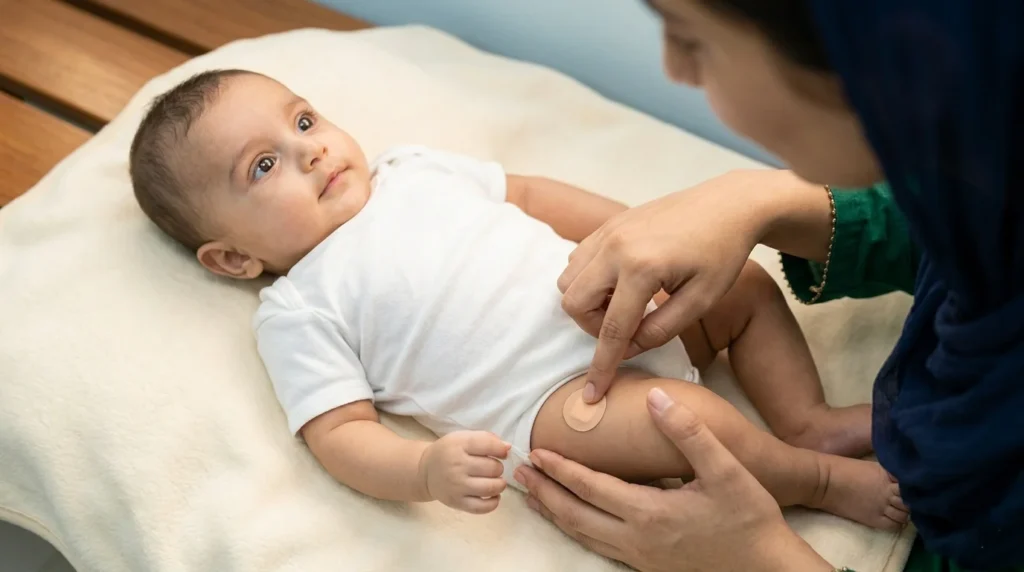
It is heartbreaking to see your baby in pain, but a post-vaccination fever is actually a good sign it means the immune system is learning.
- Paracetamol: Consult your doctor for the exact dosage based on weight.
- Cool Compresses: Do not use ice; just a damp cloth on the injection site.
- Breastfeed Often: Nursing is the best comfort and hydration during the 24 hours following a baby vaccination schedule visit.
Mama, keep that baby vaccination schedule card safe! You will need it for school admissions and future travels. If you missed a dose, don’t worry, it’s never too late to catch up. For more tips on keeping your baby healthy, check out our guide on starting solids.
Do you have questions about a specific vaccine? Drop them in the comments below, and let’s help each other stay informed!

Written by
Javeria
A passionate contributor to Coo Coo Babys, dedicated to supporting Pakistani mamas through every stage of motherhood.